

The Socotra Island cucumber tree is not strange because it grows cucumbers. It is strange because a plant family better known for vines, pumpkins, melons and gourds somehow produced a swollen dryland tree on one of the world’s most unusual islands.
Its scientific name is Dendrosicyos socotranus, and it is one of Socotra’s quieter botanical surprises. It does not have the instant fame of the Dragon Blood Tree, or the showy pink flowers of the Socotra bottle tree. But in some ways, it is even stranger. It is a cucumber-family plant that became a tree.
That is the real story here: isolation, drought, adaptation and a plant that looks as if it should not exist.
What Is the Socotra Island Cucumber Tree?
The Socotra Island cucumber tree is an endemic plant of the Socotra archipelago, especially Socotra and the nearby island of Samha. Its accepted scientific name is Dendrosicyos socotranus, and it belongs to the family Cucurbitaceae.
That family matters. Cucurbitaceae is the plant family that includes cucumbers, pumpkins, melons, squashes and gourds. Most people imagine those plants as vines, creepers or soft-stemmed garden crops. The Socotra cucumber tree breaks that expectation completely.
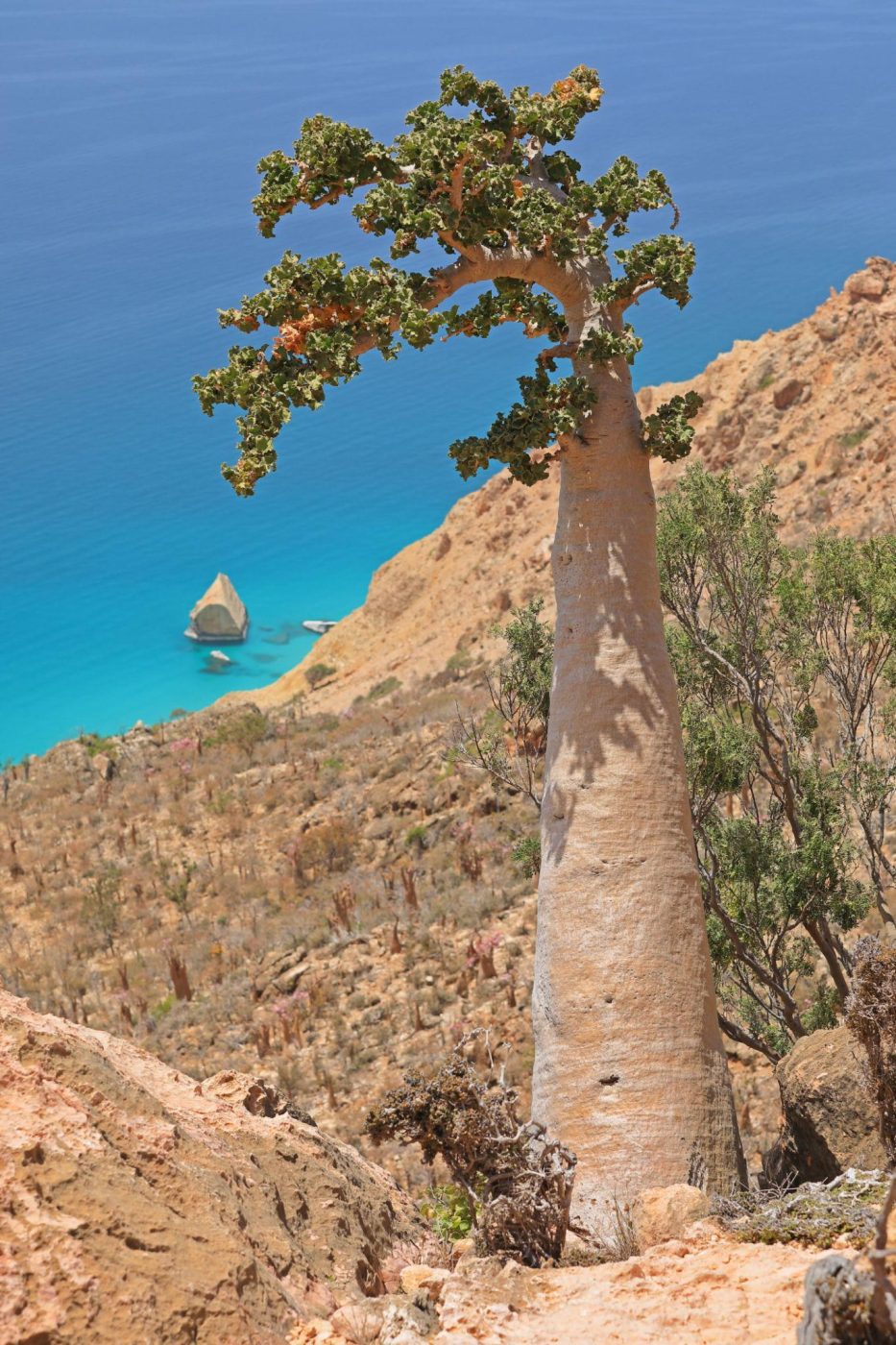
Instead of crawling along the ground or climbing over supports, it forms a semisucculent shrub or small tree with a thick swollen trunk. It grows in dry, open landscapes where water is limited and survival depends on storing moisture, reducing stress and tolerating heat.
For travelers, it may not be the first plant they notice on Socotra. The Dragon Blood Tree usually wins that contest. But once you understand what the cucumber tree is, it becomes one of the island’s most interesting plants.
Why Is It Called a Cucumber Tree?
The name is botanical, not culinary. The Socotra cucumber tree does not produce normal supermarket cucumbers. It is called a cucumber tree because it belongs to the cucumber and gourd family.
That family includes many familiar plants: cucumbers, melons, pumpkins, squashes and gourds. Most are herbaceous plants, vines or climbers. They are not the kind of plants people usually imagine becoming thick-trunked trees in dry island landscapes.
This is why the Socotra cucumber tree feels so odd. It takes a plant family associated with soft stems and sprawling growth, then turns it into something that looks closer to a small desert tree. Its swollen trunk gives it a bottle-like appearance, while its crown remains relatively modest and loose.
So if the name sounds confusing, think of it this way: it is not a tree that grows cucumbers. It is a tree-like member of the cucumber family.
That single fact is what makes it one of Socotra’s most unusual endemic plants.
Why Some Sources Say Dendrosicyos socotrana
You may see two spellings online: Dendrosicyos socotranus and Dendrosicyos socotrana. They refer to the same plant, but the accepted modern botanical name is generally given as Dendrosicyos socotranus.
Older sources often use Dendrosicyos socotrana, and that older spelling still appears in articles, plant databases, image captions and travel blogs. For a normal reader, the important thing is simple: both names point to the Socotra cucumber tree.
In this article, Dendrosicyos socotranus is used as the accepted name.
What Does the Cucumber Tree Look Like?
The Socotra cucumber tree has a strange, slightly awkward beauty. It does not look elegant in the polished garden sense. It looks adapted, dry, swollen and stubborn.
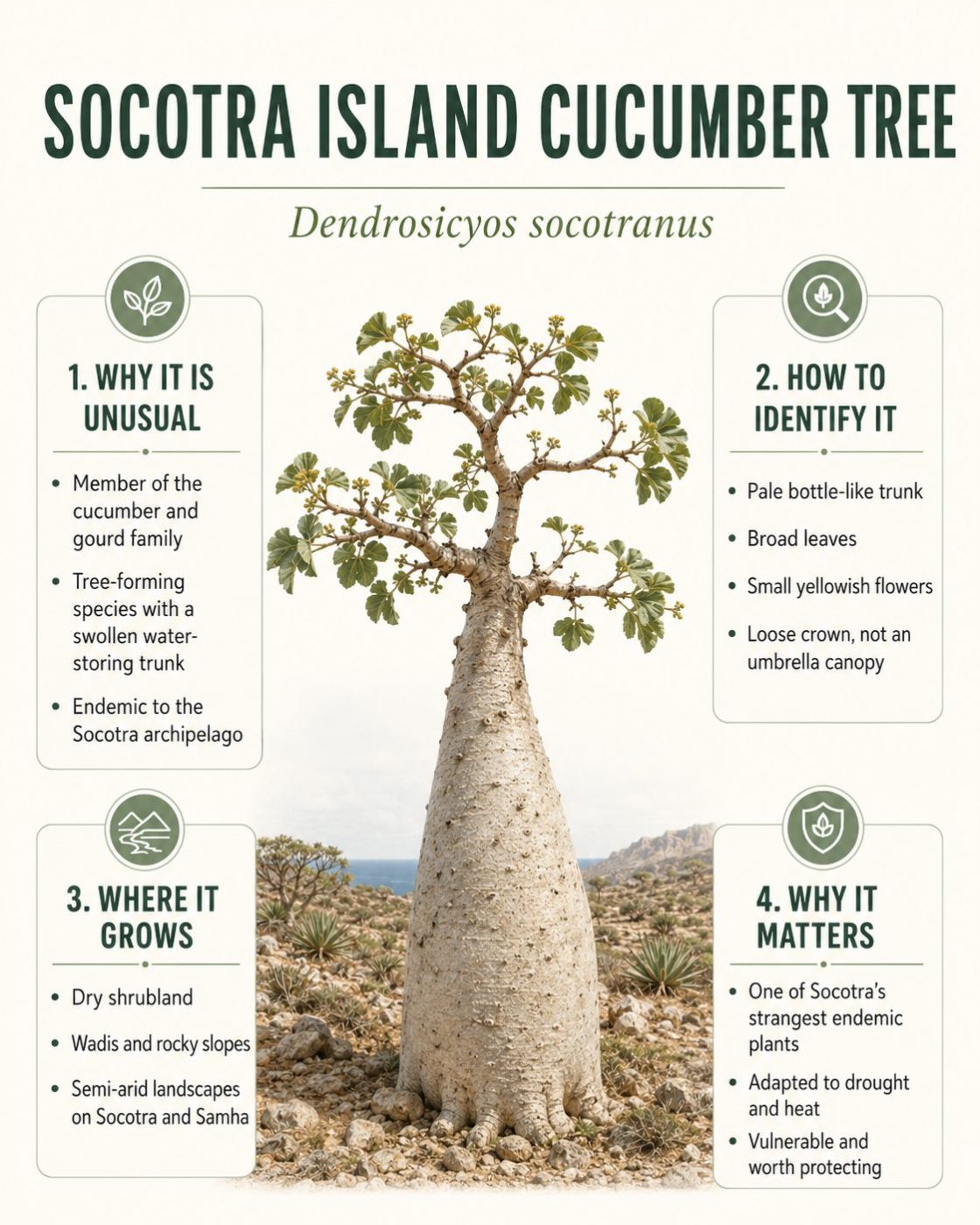
The most obvious feature is the thick pale trunk. It can look bloated or bottle-shaped, especially compared with the thinner branches above it. The crown is usually much lighter than the body of the tree, which gives the whole plant an unusual balance: heavy below, loose above.
The leaves are broad compared with what many people expect from a dryland tree. The flowers are small and yellowish rather than large and dramatic. This is one of the easiest ways to separate it from the Socotra bottle tree, which is better known for its pink flowers.
In the field, look for these clues:
- Swollen pale trunk
- Loose crown rather than umbrella-shaped canopy
- Broad leaves
- Small yellowish flowers
- No pink desert-rose flowers
- No red resin, unlike the Dragon Blood Tree
The tree can look almost unfinished, as if two different plants were joined together: a dry swollen trunk below and a lighter green crown above. That oddness is part of its appeal.
Where Does It Grow on Socotra?
The cucumber tree is associated with dry Socotran landscapes rather than lush forest. It belongs to the island’s open, arid and semi-arid environments: dry shrubland, wadis, rocky slopes, dry plains and succulent shrubland.
You understand the cucumber tree best when you see it in these settings. A swollen trunk is not decoration there. It is survival equipment.
Travelers are more likely to notice the tree in dry inland areas and wadi landscapes than in the island’s most famous beach scenes. Places such as Wadi Ayhft, Wadi Kalisan and the wider dry landscapes around Homhil help explain the kind of environment where unusual Socotran plants have evolved.
It is not always a single “go here and see one tree” attraction. It is better understood as part of the island’s dryland plant world: scattered, adapted, sometimes overlooked, but deeply tied to Socotra’s identity.
Is the Cucumber Tree the Same as the Socotra Bottle Tree?
No, not exactly. This is one of the most common points of confusion.
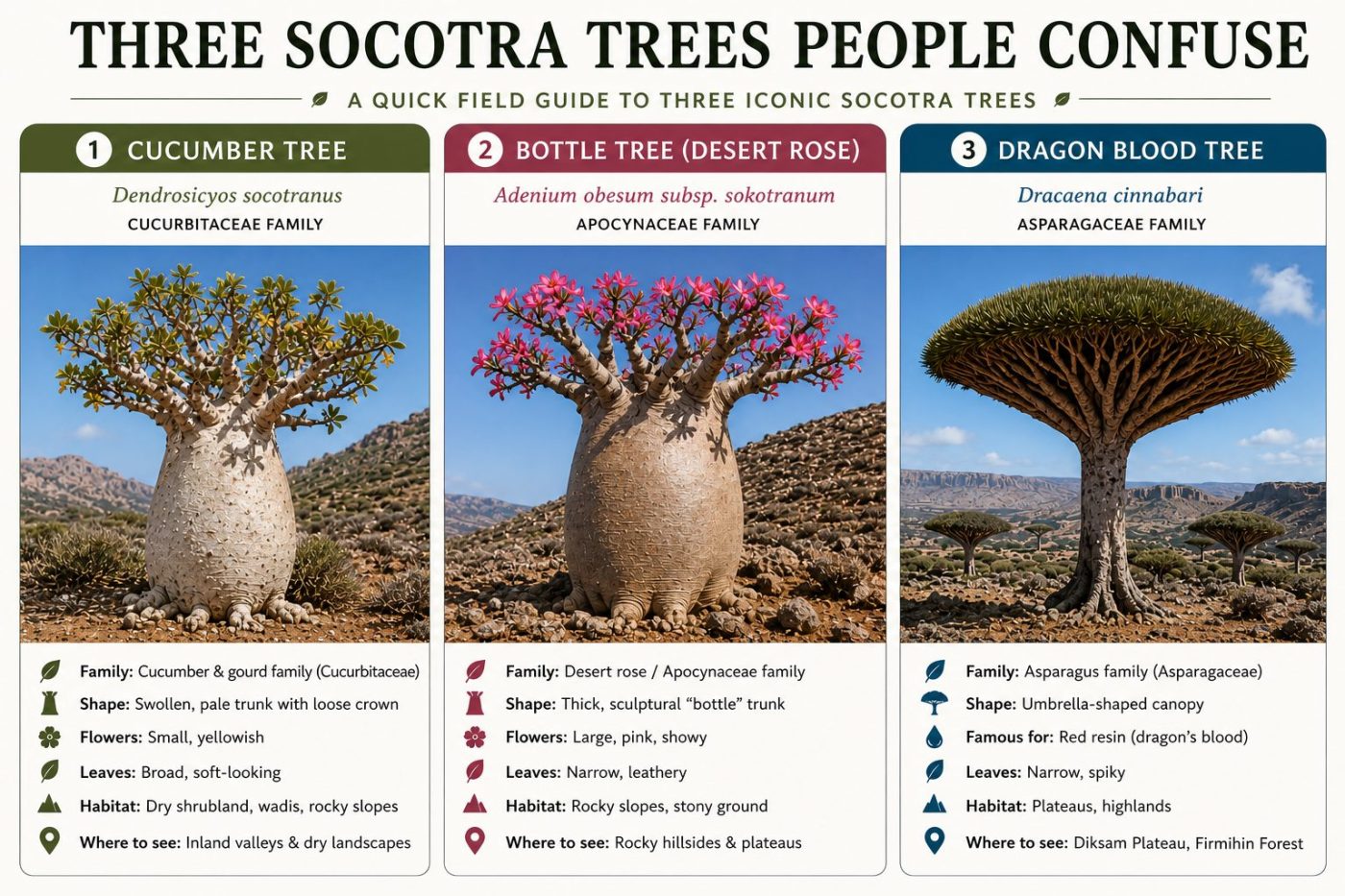
The Socotra cucumber tree can look bottle-like because of its swollen trunk. Because of that, some people casually group it with Socotra’s “bottle trees.” But the name “Socotra bottle tree” usually refers to a different plant: Adenium obesum subsp. sokotranum, also known as the Socotra desert rose.
The bottle tree / desert rose has a thick sculptural trunk and can produce beautiful pink flowers. The cucumber tree belongs to a completely different plant family and usually has small yellowish flowers.
All cucumber trees can look bottle-like, but not every Socotra bottle tree is a cucumber tree.
| Plant | Scientific name | Easy clue |
|---|---|---|
| Socotra cucumber tree | Dendrosicyos socotranus | Swollen trunk, cucumber family, small yellowish flowers |
| Socotra bottle tree / desert rose | Adenium obesum subsp. sokotranum | Thick bottle trunk and pink flowers |
The confusion is understandable. Socotra has several plants with swollen trunks or strange drought-adapted forms. But from a botanical point of view, these are not the same species.
How Is It Different from the Dragon Blood Tree?
The Dragon Blood Tree is Socotra’s most famous plant. It has a dramatic umbrella-shaped canopy, red resin and a prehistoric silhouette that dominates places such as Firmihin Forest and Diksam Plateau.
The cucumber tree is different in almost every way. It does not have the umbrella crown. It does not bleed red resin. It does not create the same forest-like visual drama. Its strangeness is quieter and more botanical.
The Dragon Blood Tree looks like an alien umbrella. The cucumber tree looks like a member of the gourd family that somehow became a dryland tree.
| Feature | Cucumber Tree | Dragon Blood Tree |
|---|---|---|
| Scientific name | Dendrosicyos socotranus | Dracaena cinnabari |
| Main shape | Swollen trunk with loose crown | Umbrella-shaped canopy |
| Famous feature | Tree form in cucumber/gourd family | Red resin and iconic canopy |
| First impression | Odd dryland bottle-like tree | Alien-looking plateau tree |
The Dragon Blood Tree is more famous, but the cucumber tree may be botanically stranger.
Why the Socotra Cucumber Tree Matters
The cucumber tree matters because it shows what island isolation can do to plant life. Socotra is famous for endemic species: plants and animals that evolved in relative isolation and are found nowhere else in the same way.
The cucumber tree is a perfect example of that story. It belongs to a familiar plant family, but its form feels unfamiliar. Its swollen trunk, dryland habitat and unusual growth habit make it a living reminder that evolution does not always follow the shapes we expect.
It also helps balance the way people think about Socotra. The island is not only about one iconic tree. The Dragon Blood Tree may be the symbol, but Socotra’s botanical richness is broader: bottle trees, frankincense, cucumber trees, desert shrubs, succulents and plants that seem to belong to another planet.
The cucumber tree is less showy than some of them. That does not make it less important. If anything, it makes it more rewarding once you notice it.
Is the Socotra Cucumber Tree Threatened?
The Socotra cucumber tree is generally treated as a threatened plant and is listed as vulnerable in major conservation references. But its story should not be exaggerated into “almost extinct” unless a source specifically supports that claim.
The conservation picture is more nuanced. Some populations face pressure from branch cutting, fodder use, grazing animals, drought stress and habitat degradation. Young plants can be especially vulnerable where grazing pressure is high. In some areas, trees may be cut back heavily, which changes their shape and weakens local populations.
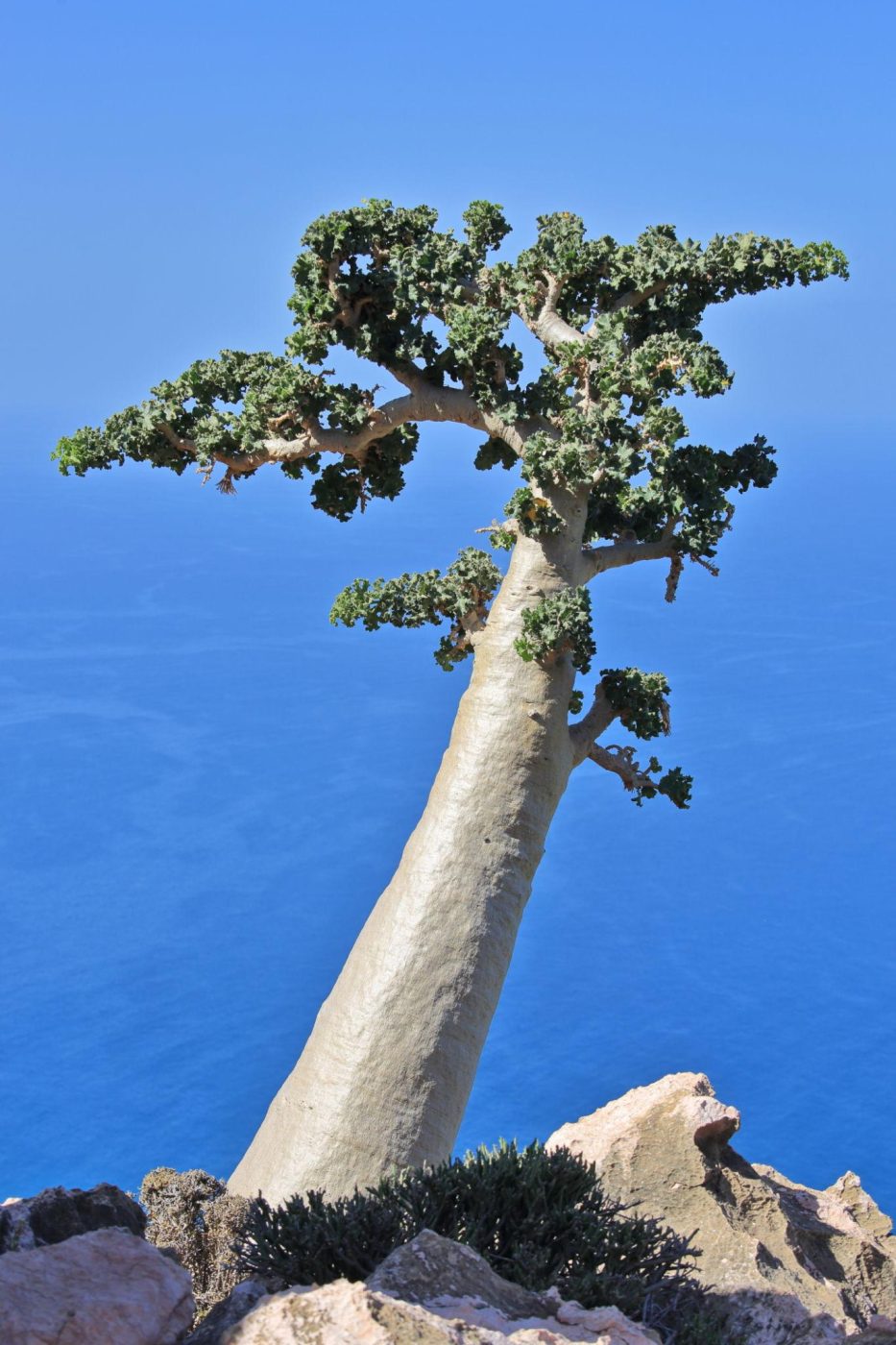
At the same time, research has found regeneration in a number of surveyed locations, which means the story is not simply one of total collapse. The better way to describe it is this: the cucumber tree is vulnerable and locally pressured, but not every population is in the same condition.
For travelers, the practical lesson is simple. Do not climb the trees, cut branches, carve bark, collect fruit or disturb seedlings. A rare plant does not need to be touched to be appreciated.
Can Travelers See the Cucumber Tree on Socotra?
Yes, travelers can see the cucumber tree on Socotra, but it should not be approached like a single famous viewpoint. It is more of a dryland plant to notice along the way, especially with a local guide who can identify it properly.
You are more likely to understand it in the right landscape: dry shrubland, wadis, rocky slopes and open arid ground. It may appear less dramatic than a Dragon Blood Tree forest or a flowering bottle tree, but its story is just as distinctive.
The best time to notice Socotra’s plants also depends on season, route and weather. For wider trip planning, see our guide to the best time to visit Socotra.
When you do see the cucumber tree, treat it as part of the island’s fragile natural heritage. Photograph it, observe it, and leave it alone.
Quick Facts About the Socotra Cucumber Tree
| Common name | Socotra cucumber tree |
|---|---|
| Scientific name | Dendrosicyos socotranus |
| Older spelling | Dendrosicyos socotrana |
| Family | Cucurbitaceae |
| Related plant group | Cucumbers, melons, pumpkins, squashes and gourds |
| Native range | Socotra archipelago, especially Socotra and Samha |
| Growth form | Semisucculent shrub or tree |
| Main habitat | Dry shrubland, wadis and desert-like landscapes |
| Conservation status | Vulnerable |
| Best-known feature | Swollen trunk and unusual tree form in the cucumber family |
FAQ: Socotra Island Cucumber Tree
Does the Socotra cucumber tree grow cucumbers?
No. The name comes from its botanical family, Cucurbitaceae, which includes cucumbers, melons, pumpkins, squashes and gourds. It does not grow normal garden cucumbers.
Is the Socotra cucumber tree a real tree?
Yes, it grows as a semisucculent shrub or small tree with a swollen trunk. That tree-like form is what makes it so unusual within the cucumber and gourd family.
What is Dendrosicyos socotranus?
Dendrosicyos socotranus is the accepted scientific name of the Socotra cucumber tree, an endemic plant of the Socotra archipelago.
Why do some sources say Dendrosicyos socotrana?
Dendrosicyos socotrana is an older spelling that still appears in some sources. The same plant is generally treated under the accepted name Dendrosicyos socotranus.
Is the cucumber tree the same as the Socotra bottle tree?
No. The cucumber tree can look bottle-like because of its swollen trunk, but the Socotra bottle tree usually refers to the Socotra desert rose, Adenium obesum subsp. sokotranum.
Is it the same as the Dragon Blood Tree?
No. The Dragon Blood Tree is Dracaena cinnabari, famous for its umbrella-shaped canopy and red resin. The cucumber tree is Dendrosicyos socotranus, a very different plant from the cucumber and gourd family.
Where does the cucumber tree grow on Socotra?
It grows mainly in dry shrubland, wadis, rocky slopes and desert-like habitats within the Socotra archipelago, especially Socotra and Samha.
Is the Socotra cucumber tree endangered?
It is best described as vulnerable or threatened rather than casually called “almost extinct.” Some populations face pressure from cutting, grazing and habitat stress, but the conservation picture is more nuanced than a simple extinction story.
Can travelers see it on a Socotra trip?
Yes, travelers may see it in dryland landscapes and wadis, especially with a knowledgeable local guide. It is less instantly famous than the Dragon Blood Tree, but it is one of Socotra’s most unusual endemic plants.
Final Thoughts
The Socotra Island cucumber tree is one of the island’s quiet botanical miracles. It is less famous than the Dragon Blood Tree and less flamboyant than the pink-flowered bottle tree, but scientifically it may be stranger than both.
It belongs to the cucumber and gourd family, yet it stands as a swollen dryland tree. It looks odd because it is odd: a product of isolation, drought and evolutionary possibility.
That is why it deserves more than a passing mention. On an island full of strange plants, the cucumber tree is one of the best reminders that Socotra’s weirdness is not only visual. It is botanical, ancient and deeply local.