

Not every coastal stop on Socotra arrives with cliffs, giant dunes or some dramatic sense of scale. Some places work in a quieter way. Qaria Lagoon is one of them. The landscape here feels softer than many of the island’s exposed shorelines. The sea pulls back, the coast loosens up, and the whole setting begins to feel less like an outer edge and more like a sheltered pause along the north coast.
Geographically, Qaria Lagoon belongs to the northern side of Socotra, where the island’s route structure becomes more practical, more varied, a little easier to layer into a full day. People come here not for one huge landmark, but for a calmer coastal environment — shallow water, lighter tones, gentler shoreline curves and a lagoon setting that contrasts nicely with rougher reef zones or more open beaches nearby.
In most itineraries, Qaria Lagoon works as a short north coast stop. It fits naturally between more active or route-heavy places such as Dihamri, inland valleys like Wadi Ayhft, and the logistical base of Hadibu. It is not the loudest stop in the cluster. Honestly, that is part of the appeal.
Qaria Lagoon at a Glance
A quiet north coast lagoon on Socotra, visited for sheltered shoreline scenery and its easy fit within the island’s northern route.
North coast of Socotra
Lagoon, shallow coastal inlet, quiet shoreline
30–60 minutes
Short coastal stop, scenery, relaxed route break
October to April
What This Place Is Actually Like
Qaria Lagoon feels calmer than many other coastal landscapes on Socotra. The water often looks shallower and more settled, and the shoreline usually unfolds in low, easy curves rather than abrupt drops, rough shelves or heavy surf lines. The atmosphere is less about raw impact and more about texture — pale sand, quiet water, soft reflections, open air and a kind of visual breathing room that not every beach or reef stop gives you.
That does not mean the place feels flat or forgettable. Not at all. Lagoon environments often work precisely because they slow the day down. After long dry roads, more exposed coastline, or a stop where the scenery comes at you harder, arriving at a sheltered inlet changes the rhythm. The wind may still move across the shore, but the water often reads smoother, the shoreline becomes easier to scan, and the whole place settles into view in a single glance.
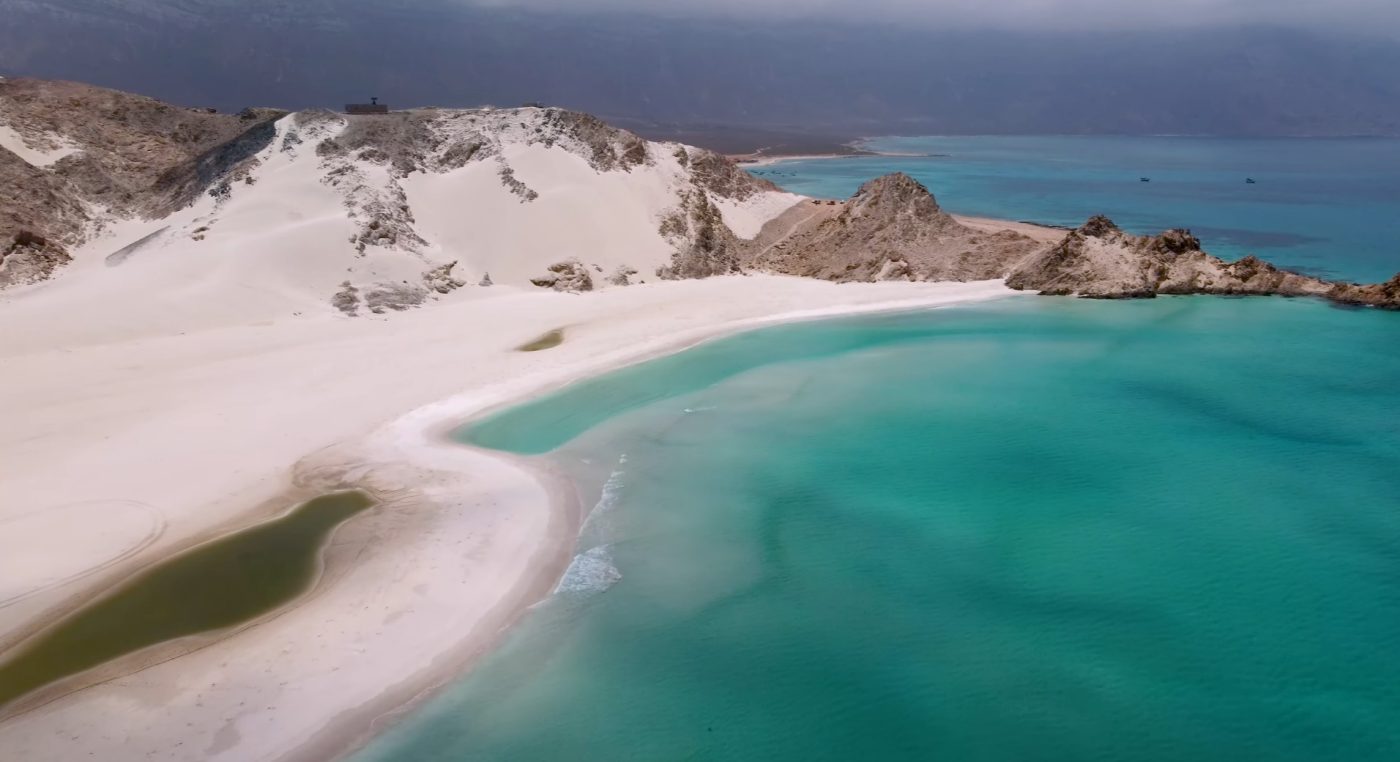
I think that matters more than people admit. Not every stop has to dominate the route to improve it.
Light matters here too. Under hard midday sun the lagoon can look simple, almost too simple. Earlier in the morning, or later when the light softens, the contrast between shallow water, pale sediment and darker sea outside the lagoon becomes much more interesting. That is usually when Qaria starts feeling less like a minor pause and more like a distinct piece of north coast geography.
How Qaria Lagoon Fits Into a Socotra Route
Qaria Lagoon works best inside the logic of a northern route rather than as some isolated destination. It is the kind of place that improves the sequence of a day. A route made only of driving, exposed beaches or inland tracks can start feeling one-note. A lagoon stop changes that tone.
Because the north coast holds several different landscape types within relatively manageable travel distances, Qaria slips into the region very easily. That is one of its strengths. You do not have to build the day around it. It naturally belongs there.
The stop also helps editorially. Pages like this make the cluster feel more complete because Socotra is not only about spectacle. There are quieter places too, and those quieter places often make the bigger ones land better by contrast.
Typical Route Logic
Main Experience Here
Most visitors stop briefly to walk the shoreline, observe the lagoon landscape and enjoy a quieter coastal section of the island.
Next Stop
After Qaria, itineraries often continue inland toward Wadi Ayhft or return along the north coast toward Hadibu.
The Landscape Around Qaria Lagoon
What makes Qaria useful is not only the lagoon itself, but the wider setting around it. The north coast of Socotra is not one uniform shoreline. It shifts between reef zones, rocky coastal sections, shallow inlets, road-accessible beaches and routes that turn inland toward wadis and higher ground. Qaria belongs to that transitional geography.
The terrain around the lagoon usually feels lower and more open than the island’s mountain areas. Coastal ground spreads outward in flatter bands, and the shoreline shape lets water settle into a more protected form. That is why the lagoon reads differently from an open beach. It is not just a strip of sand with the sea in front of it. It is a gentler indentation in the coast, a place where the shoreline relaxes a bit.
This also helps explain why Qaria pairs so naturally with nearby pages in the same cluster. Dihamri shows the reef and marine side of the north coast. Wadi Ayhft shifts the geography inland toward valley scenery and greener terrain. Hadibu connects all of it through route reality, logistics and movement.
So even if Qaria itself is a smaller stop, it plays a useful role. It helps the region feel like a real geographic sequence instead of a pile of unrelated attractions.
Travel Conditions and Practical Reality
Qaria Lagoon is a simple stop, but simplicity still comes with the usual practical realities of Socotra travel.
What to Expect
None of that really hurts the place. On Socotra, these quieter natural stops often work precisely because they have not been overbuilt or polished into something generic.
Best Time to Visit
Qaria Lagoon is usually most comfortable during the cooler travel season from autumn through spring, when the north coast is easier to explore and exposed coastal stops feel less punishing under the sun. This is generally the strongest period for building a full day around northern route movement.
In hotter months, the stop is still possible, but timing matters more. Open coastal ground and minimal shade can make even a short visit feel draining in the middle of the day. Morning and late afternoon usually give the lagoon better light anyway, so they tend to be the stronger choice both visually and practically.
That softer light also helps the lagoon read properly. The shallows, the tonal variation in the water, the pale shoreline edges — they all show better when the sun is not flattening everything.
How Long to Spend Here
For most itineraries, Qaria Lagoon is a short stop of around thirty minutes to one hour. That is typically enough time to understand the landscape, walk a little along the shoreline and break up a longer north coast route without forcing the place to be more than it is.
It works especially well when combined with Dihamri for marine scenery, Wadi Ayhft for inland contrast, or Hadibu as the practical start or finish of the day.
On its own, it is rarely a half-day destination. Inside the route, though, it makes perfect sense.
Practical Travel Facts
| Location | North coast of Socotra Island |
|---|---|
| Landscape type | Lagoon and shallow coastal inlet |
| Main attraction | Quiet coastal scenery and sheltered lagoon setting |
| Typical visit length | 30–60 minutes |
| Nearby destinations | Dihamri, Wadi Ayhft, Hadibu |
| Travel style | Part of north coast route |
Final Thoughts on Qaria Lagoon
Qaria Lagoon is not one of the loudest landscapes on Socotra, and that is exactly why it works. It adds a quieter tone to the north coast — more sheltered, less dramatic, but still clearly shaped by the island’s unusual shoreline geography.
Inside the wider route, it helps connect reef stops like Dihamri, inland pages such as Wadi Ayhft and the logistical center of Hadibu. That makes it a useful and natural part of the Socotra cluster, not just filler between bigger names.