

High in the mountains of northeastern Socotra lies Homhil, a protected natural area that feels both dramatic and oddly quiet at the same time. It is known for its elevated viewpoints, scattered dragon blood trees and one of the island’s strangest little landmarks — a rock pool perched above deep valleys, with the horizon opening beyond it in a way that makes the whole place feel unreal for a second.
Getting to Homhil means leaving the coastal plains behind and pushing inland toward the mountains. The road climbs, the heat shifts, the terrain hardens. The island starts looking less coastal and more highland, more exposed, more severe. In that sense it shares something with Diksam Plateau, where rocky uplands and endemic vegetation reshape the whole mood of the journey.
Still, Homhil is not just a copy of Diksam in another corner of Socotra. The character is different here. The plateau is narrower in feeling, the surrounding terrain more broken, the views more sudden. Dragon blood trees appear across the landscape much like they do around Firmihin Forest, but the real pull of Homhil comes from the way these upland ecosystems meet steep valley drop-offs and long mountain outlooks.
That mix is what makes the place stick. It is botanical, scenic, geologic, a little surreal. Honestly, a lot of highland stops are beautiful, but Homhil has one of the strongest identities of any of them.
Homhil at a Glance
A protected nature area in the mountains of Socotra known for dragon blood trees, endemic plants and a natural rock pool overlooking the valleys below.
Northeastern highlands of Socotra
Mountain plateau with dragon blood trees
Natural rock pool viewpoint
1–2 hours
The Landscape of Homhil
The landscape around Homhil pulls together several sides of Socotra at once. It has the elevated limestone feel of a plateau, the fractured shape of a mountain zone, and the ecological weirdness that makes the island famous in the first place. Rocky ground spreads across the high terrain, while steep valleys cut down through the surrounding hills and pull the eye outward toward the lower lands below.
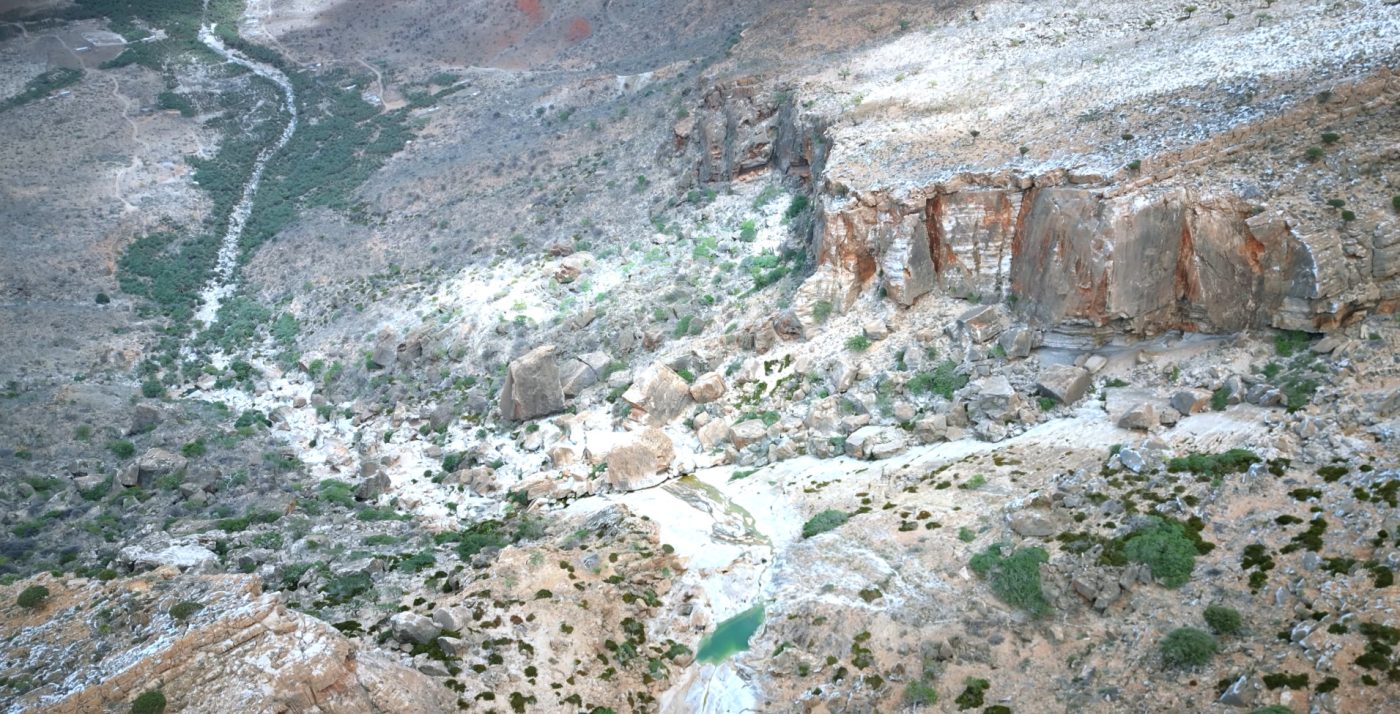
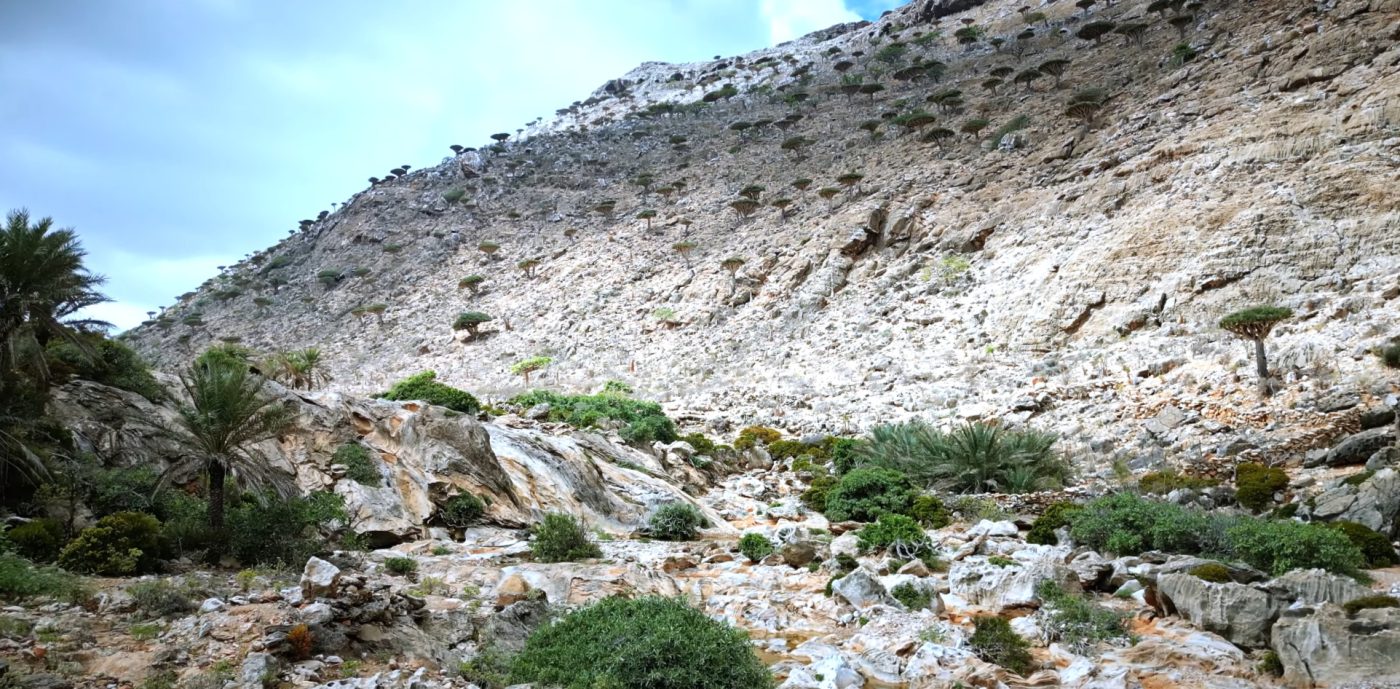
Dragon blood trees grow across parts of the area, scattered rather than dense, giving the plateau that instantly recognizable Socotran silhouette. In mood, the vegetation recalls the uplands near Diksam Plateau, though Homhil feels a little more enclosed and abrupt because the ridges and slopes around it sit closer. The scenery does not stretch with the same broad openness everywhere. It folds. It drops. It surprises you from the edges.
Other endemic and drought-adapted plants also shape the area. Alongside dragon blood trees, visitors may notice frankincense trees and additional native species adapted to Socotra’s dry mountain climate, thin soils and exposed rock. The vegetation never feels lush in the classic sense. It feels selective, specialized, almost stubborn.
And that’s part of the appeal. Nothing here looks generic.
Because Homhil stands above the lower plains, the air often feels cooler than the coast, and the wind moves more freely across the terrain. Light changes fast up here too. One minute the rock looks pale and flat, the next the shadows pull definition out of every ridge and shrub. The place has texture. A lot of it.
The Famous Natural Pool
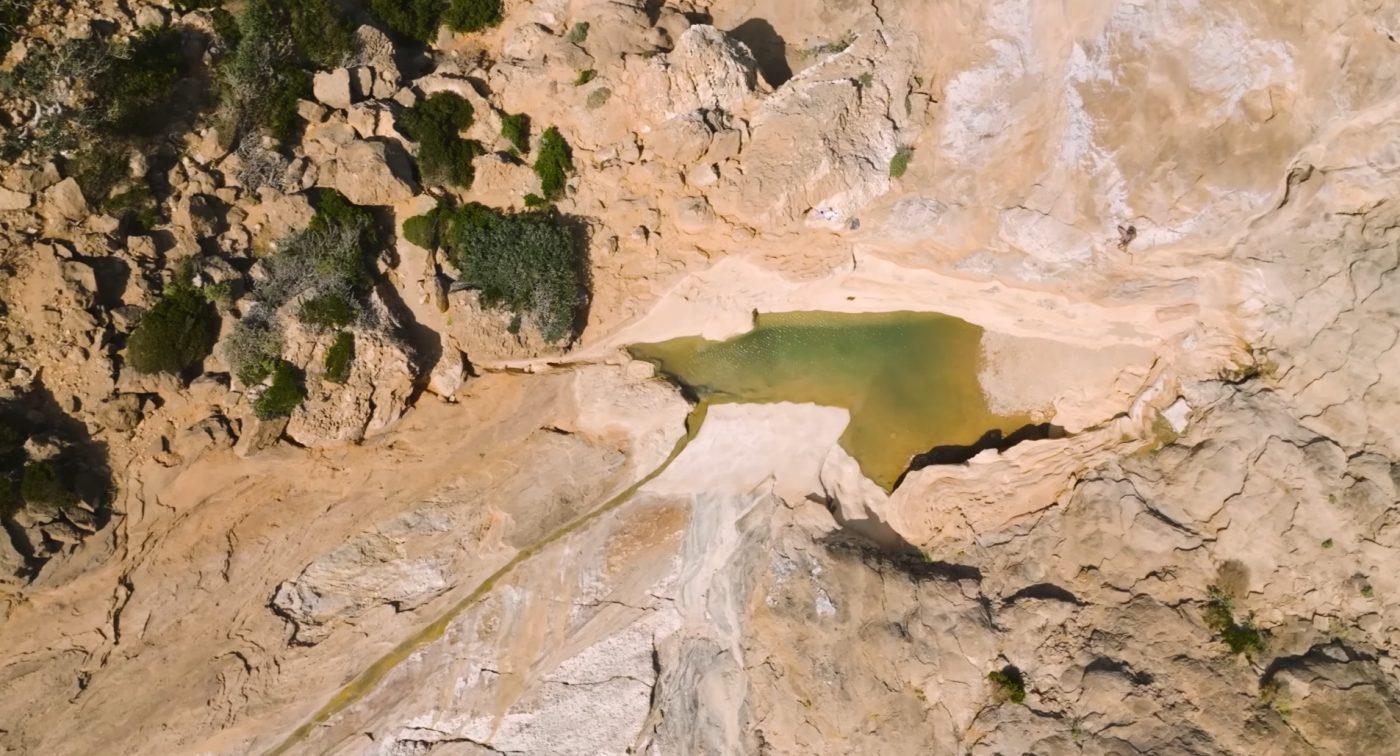
The best-known feature of Homhil is its natural rock pool, and yes, this is the spot most people remember first. The pool is not huge. It is not some giant mountain lake or dramatic waterfall basin. It is smaller, simpler — a shallow natural depression in the rock that holds water and sits close enough to the edge of the plateau to create a view that feels almost absurdly cinematic.
That setting is what makes it special.
The basin lies near a steep drop overlooking the valleys below. From the right angle, the water seems to run straight toward open space, blending visually with the landscape beyond and creating the illusion of a natural infinity pool suspended above Socotra’s interior terrain.
It sounds a bit too neat when written out like that, maybe. But in person it lands.
The pool itself is not valuable because of size. It works because of contrast: still water, hard rock, empty air beyond the edge, then wide mountain valleys descending away toward the distant coast. A tiny feature placed in a massive setting.
That’s why so many photographs come from here. The composition is basically built in — rock foreground, reflective water, then all that depth beyond. But even without a camera, the place has that rare thing some viewpoints get right. It makes people stop talking for a second.
To be fair, plenty of scenic places get hyped into nonsense. Homhil’s pool is one of the few that actually earns the attention.
Why Homhil Feels Different from Other Highland Stops
Socotra has more than one dragon blood tree area, more than one plateau route, more than one elevated viewpoint. So Homhil matters because it combines these elements in a tighter, more dramatic way. It is not only about endemic flora. It is not only about wide views. It is the overlap that gives it identity.
At Firmihin Forest, the dragon blood trees dominate the whole experience through scale and repetition. At Diksam Plateau, the highland mood comes from openness, limestone expanses and canyon views. Homhil feels more intimate than both in some ways. The vegetation is there, the altitude is there, the views are there — but everything is compressed into a setting that feels steeper, closer, slightly more dramatic.
Maybe that is why it stays in memory so well. It gives you several versions of Socotra at once: botanical oddity, mountain outlook, protected highland habitat, and that strange pool near the edge that almost looks staged by nature just to annoy people who hate clichés.
Only this one is real.
How Homhil Fits Into a Socotra Travel Route
Homhil is usually visited as part of a mountain or inland route linking Socotra’s central highlands with the eastern side of the island. It works especially well after travelers have already seen other upland areas, because by then the differences become more obvious.
A common sequence starts with places like Diksam Plateau and Firmihin Forest, where the journey focuses on limestone highlands, canyon scenery and dragon blood tree landscapes. From there the route can continue toward Homhil, where the scenery becomes more broken and viewpoint-driven.
After Homhil, some itineraries keep moving east toward places such as Hoq Cave, coastal dunes or other eastern landscapes. That makes Homhil a useful transition point between the central mountains and the island’s eastern routes.
Most visits are not especially long. People usually spend time walking the area, taking in the viewpoints, seeing the natural pool, and absorbing the strange mix of plateau flora and mountain exposure. Even a short stop can feel rich here because the scenery is layered tightly together.
I think that is why Homhil never feels like filler on an itinerary. It has its own personality. Strong one too.
Typical Highlands Route
Diksam Plateau
Travelers begin in the central highlands, exploring the limestone landscapes and elevated terrain of Diksam Plateau.
Firmihin Forest
The route continues through Firmihin Forest, where dragon blood trees spread across one of the island’s most iconic upland ecosystems.
Homhil
From the central plateau zone, travelers continue toward Homhil to see the natural rock pool, endemic vegetation and panoramic mountain viewpoints.
Travel Conditions Around Homhil
Getting to Homhil means heading straight into Socotra’s interior mountains. The road climbs slowly through rocky hills and dry slopes, twisting along narrow tracks that hug the sides of the terrain. Nothing about the drive feels fast. Vehicles crawl along the path, tires rolling over uneven stone, the landscape opening little by little as the elevation increases.
The distance itself isn’t huge, but the ground dictates the pace. On paved roads the journey would feel short. Up here it stretches out. Drivers ease the vehicle over rough sections of track while the mountains rise around the plateau where the protected nature area begins.
Once you reach the main parking spots, the rest of the visit happens on foot. Short walking paths lead toward the famous natural pool and the viewpoints scattered along the ridge. The terrain is mostly limestone rock and dry soil. Nothing technical, but good footwear helps when wandering around the plateau.
What to Expect When Visiting Homhil
Even with the rough terrain, Homhil is still considered one of the easier mountain stops on Socotra. The viewpoints sit fairly close to the road, which means people can explore the area without committing to long hikes across the highlands.
Best Time to Visit Homhil
Most travelers reach Homhil during the calmer months between October and April. Temperatures across Socotra stay moderate during this period, and the highlands often feel noticeably cooler than the coastline.
Morning visits sometimes bring a strange atmosphere to the plateau. Light mist drifts across the rocky hills, weaving between scattered dragon blood trees before slowly fading as the sun rises higher.
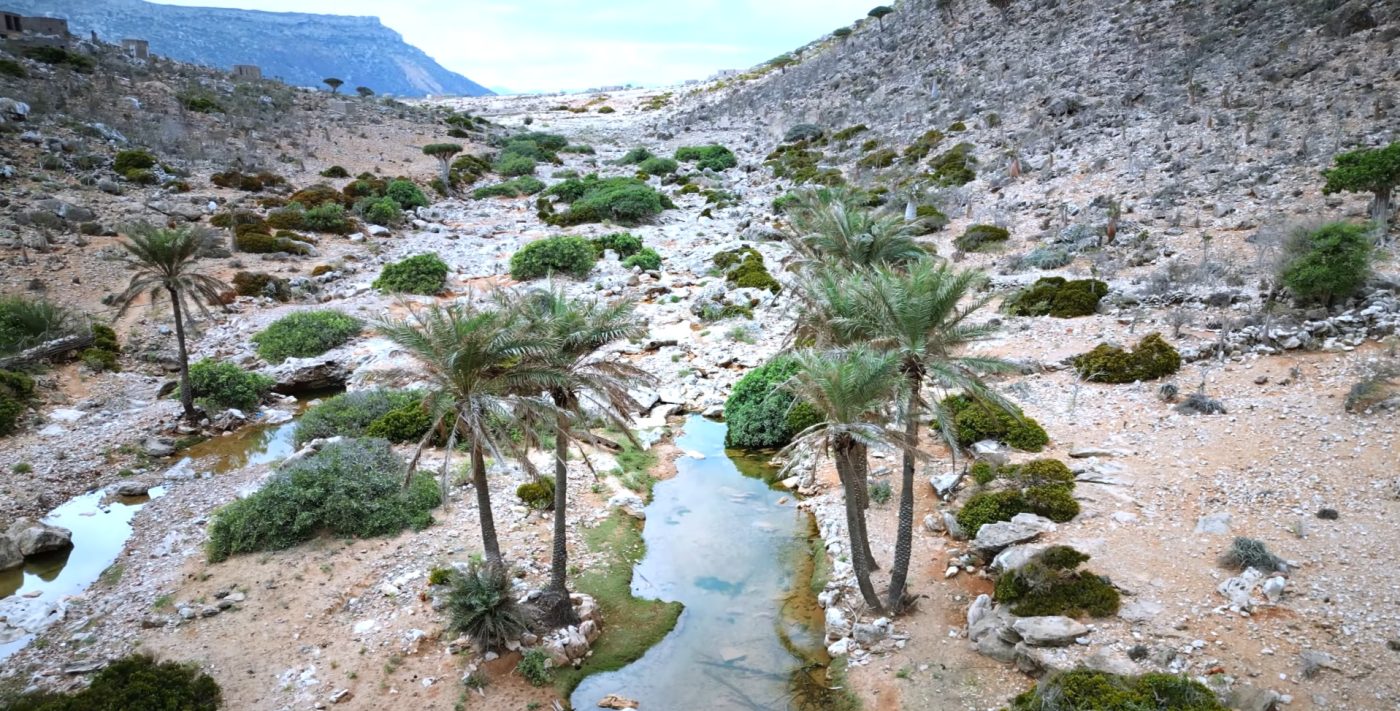
Late afternoon works just as well. When the sun drops lower, shadows stretch across the mountains and the valley below starts showing more depth. The landscape suddenly looks bigger than it did earlier in the day.
During the monsoon months from June through September strong winds sweep across the island. Those winds reach the highlands too. Roads across exposed mountain areas can become dusty and travel occasionally feels rougher than usual.
How Long to Spend at Homhil
Most visitors spend around one or two hours exploring Homhil. That gives enough time to walk toward the natural pool viewpoint, wander among the dragon blood trees nearby and pause at a few overlooks facing the valleys.
Homhil usually appears as one stop along a broader route through Socotra’s highlands. Travelers often combine the visit with places like Diksam Plateau and Firmihin Forest.
After the mountain plateau, some itineraries continue east across the island. Routes may lead toward Hoq Cave or the northern coastline where cliffs and beaches reshape the scenery again.
That contrast — mountains first, then coast later — is one of the strange pleasures of traveling around Socotra. The landscapes keep shifting through the day.
Practical Travel Facts
| Location | Northeastern highlands of Socotra Island |
|---|---|
| Landscape type | Mountain plateau with dragon blood trees |
| Main attraction | Natural rock pool overlooking the valleys below |
| Typical visit length | 1–2 hours |
| Nearby destinations | Diksam Plateau, Firmihin Forest, Hoq Cave |
| Travel style | Part of the central highlands and eastern route across Socotra |
Final Thoughts on Homhil
Homhil reveals a side of Socotra that surprises many travelers. The island is famous for beaches and turquoise lagoons, but the highlands feel completely different. Up here the landscape is shaped by elevation, wind and those strange dragon blood trees scattered across the plateau.
Standing near the natural pool above the valleys creates one of the most memorable viewpoints in the mountains. The drop below feels enormous, and the plateau around it carries a quiet atmosphere that’s hard to explain.
Together with nearby areas like Diksam Plateau and Firmihin Forest, Homhil forms part of the central highland ecosystem that defines the island’s interior landscapes.
For anyone exploring beyond the coastline, this plateau shows that Socotra’s identity isn’t only about beaches. The mountains have their own strange beauty.