

High above the coastal plains of Socotra, the island changes character completely. The road climbs into the central highlands, the air cools, the land opens up, and the scenery becomes drier, stranger, more skeletal. Wide limestone surfaces stretch across the plateau, wind moves hard and clean through the uplands, and those famous umbrella-shaped trees begin appearing against the horizon like something half botanical, half myth.
This is the world of Diksam Plateau, and within that elevated landscape lies one of Socotra’s most iconic natural sites — Firmihin Forest.
Firmihin is often described as the largest concentration of dragon blood trees on the island, and once you see it, that reputation makes sense immediately. These trees do not appear here as isolated curiosities or single postcard specimens. They spread across the highland terrain in large numbers, shaping the entire visual identity of the landscape.
For many travelers, this is the place where Socotra finally stops feeling like a collection of famous images and starts feeling like a real ecosystem. You are not just looking at one dragon blood tree for a photo. You are standing inside a whole upland habitat built around them.
Firmihin Forest at a Glance
The largest concentration of dragon blood trees on Socotra, set across the elevated limestone highlands of Diksam Plateau.
Central highlands of Socotra
Large dragon blood tree forest
1–2 hours
Around 800 meters above sea level
The Landscape of Firmihin Forest
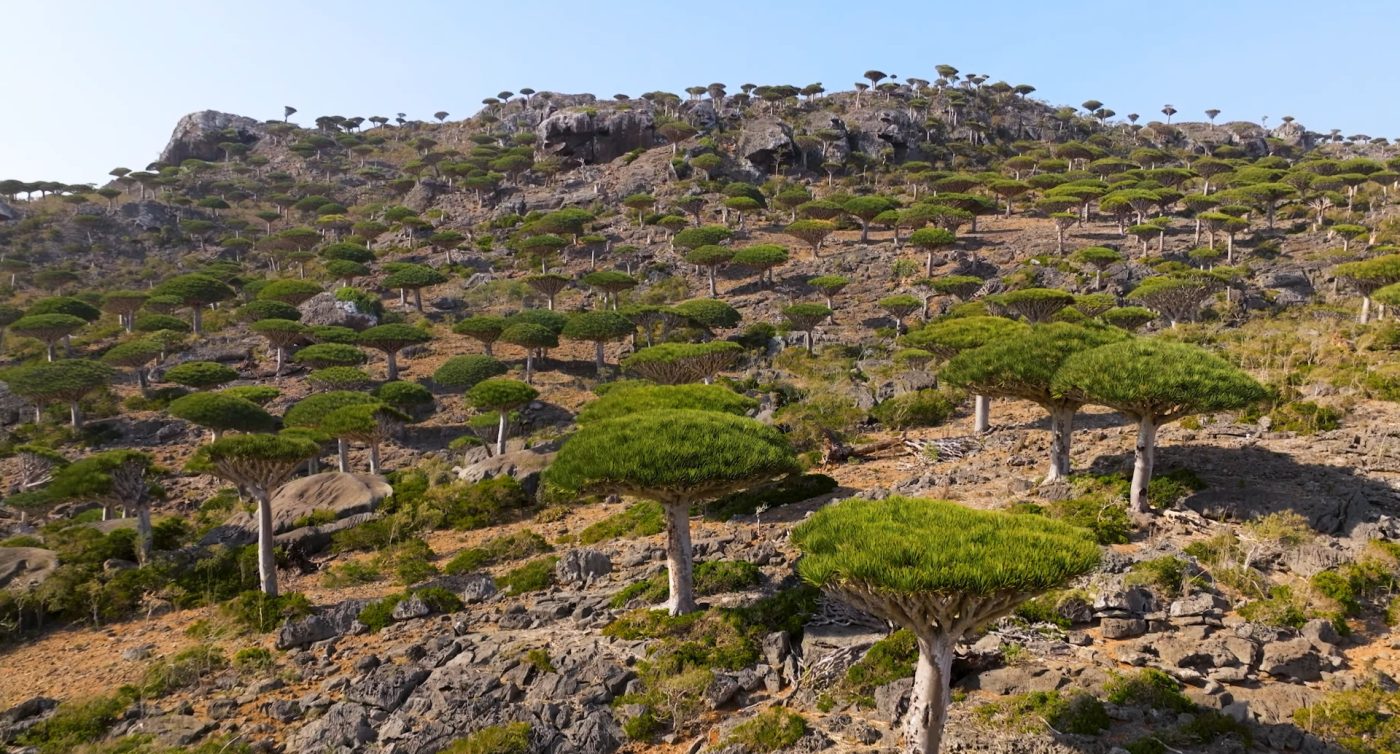
The first thing that catches many people off guard is the word forest itself. Firmihin does not look like a dense woodland in the usual sense. There is no thick green canopy closing over a trail, no humid jungle feeling, no layered undergrowth swallowing the ground. The landscape is open. Spacious. Rocky. The dragon blood trees stand apart from each other across the plateau, scattered in clusters and loose patterns rather than packed into tight vegetation.
That spacing is a huge part of what makes the place so visually striking. The trees do not blur into one solid mass. Each one holds its own shape. Each crown rises distinctly above the limestone terrain, and together they create this repeated pattern across the hills — a kind of rhythm made from silhouettes.
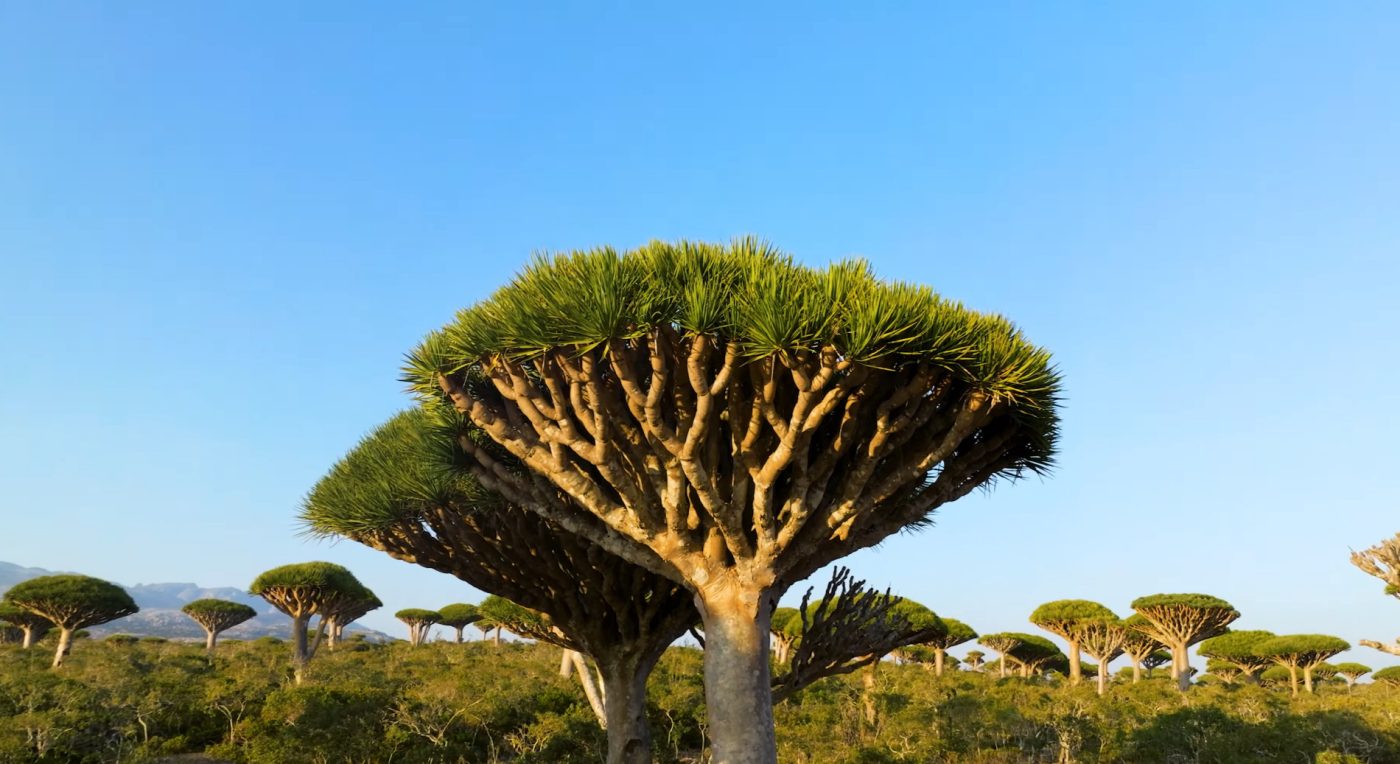
From a distance the plateau can look almost unreal, like a field of giant green umbrellas placed one by one across the highlands. It sounds exaggerated until you see it. Then it feels almost too obvious.
Each dragon blood tree grows on a thick trunk that lifts a wide branching crown above the rocky surface. Over time the canopy expands into that famous mushroom-like or umbrella-like form, broad and dense at the top, sparse beneath, with a shape that feels so precise it almost looks engineered.
The ground below stays mostly dry and stony. Low vegetation appears here and there, but it never steals attention. The trees dominate everything. That is the whole mood of Firmihin — open highland terrain, pale rock, thin grasses in places, and those dark green crowns holding the entire landscape together.
Honestly, it is one of those places that can look strange even in photos, but in person it becomes stranger in a better way. More textured. Less decorative. More alive.
Dragon Blood Trees and the Ecology of the Highlands
The dragon blood tree is one of Socotra’s most famous endemic plants, but the real story is not just that it looks unusual. The shape is functional. The tree evolved for harsh upland conditions where moisture can be inconsistent and direct rainfall is not always reliable.
Instead of depending only on rain, the tree benefits from fog, mist and condensation moving across the plateau during cooler periods. Its umbrella-shaped canopy helps trap moisture from the air. Water droplets collect on the branches and eventually drip down toward the base of the tree, where they help maintain slightly better soil moisture beneath the crown.
That may sound small. It isn’t small. In a dry limestone environment, tiny advantages matter.
This is one reason dragon blood trees grow best in higher parts of Socotra such as Diksam Plateau and the surrounding uplands. Cooler temperatures, altitude, seasonal mist and the structure of the plateau all help create the conditions these trees need. Firmihin is one of the clearest expressions of that ecological balance — a place where the species does not merely survive, but shapes an entire highland landscape.
And that landscape is fragile. You can feel that too. The trees grow slowly. The terrain looks tough but not indestructible. Nothing about Firmihin feels disposable or endlessly renewable. It feels old, specific, slightly exposed.
Why Firmihin Forest Is One of Socotra’s Most Famous Landscapes
A lot of people arrive on Socotra already knowing the image. Dragon blood trees have basically become the visual shorthand for the island. They show up in travel photography, documentaries, guide material, conservation discussions, everywhere. So there is already an expectation before anyone reaches Firmihin.
Still, seeing one dragon blood tree by the roadside is not the same as seeing an entire plateau filled with them.
That is the difference Firmihin delivers.
Here the scale becomes obvious. Hillsides dotted with hundreds of dragon blood trees spread outward across the highlands, and the repetition of those strange crowns creates a landscape that feels prehistoric, almost unreal, maybe even a little severe. The place has beauty, sure, but not in a soft way. It is not lush-beautiful. It is stark-beautiful.
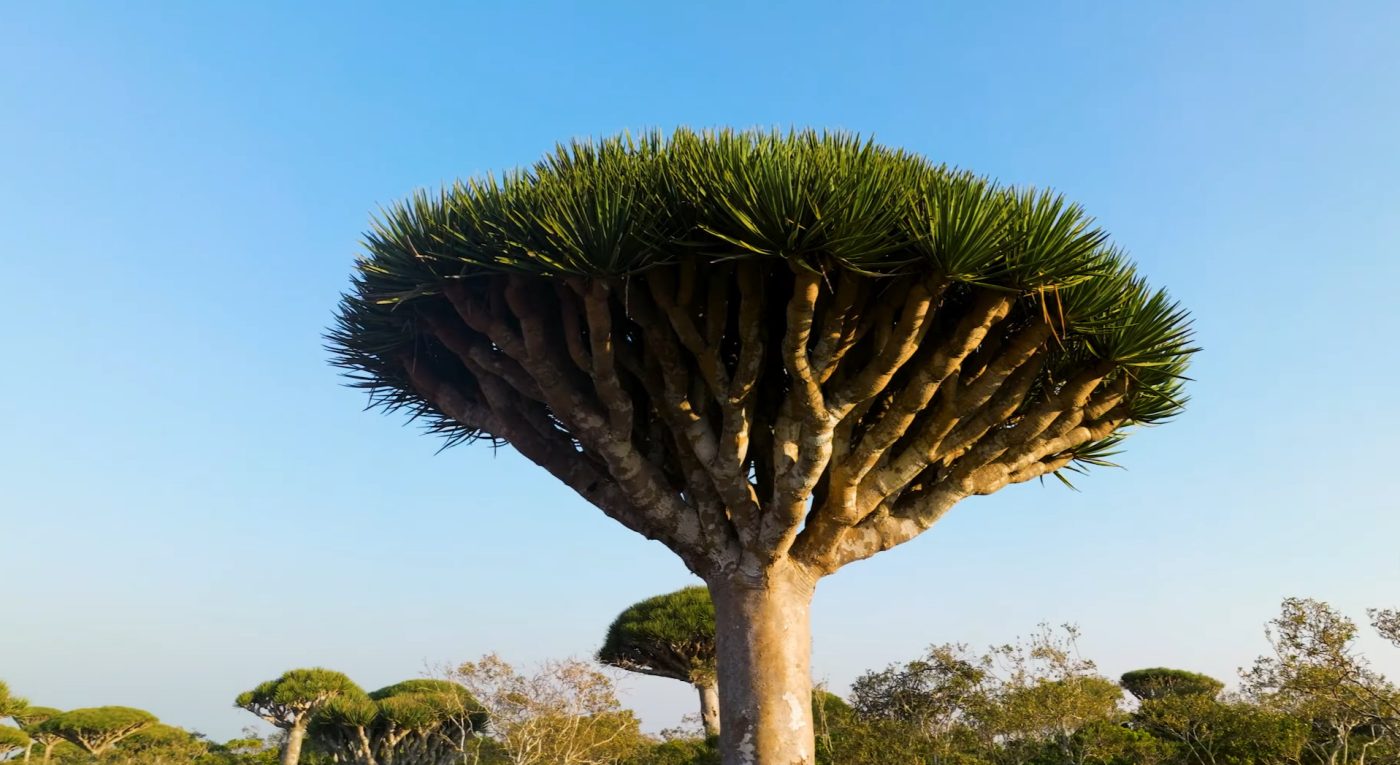
Light changes everything here. Early in the morning the plateau can feel cold, pale, almost quiet to the point of being empty. Later in the day the tree crowns stand out more sharply against the rock. In the late afternoon the low sun throws long shadows across the ground and suddenly every umbrella shape becomes more dramatic, more sculptural, more defined.
That is when Firmihin really hits for a lot of people.
Not because the place becomes more famous in that light. Because it becomes more physical. The crowns, the trunks, the spacing between trees, the broken limestone, the dark green against pale ground — it all sharpens.
For many visitors, this becomes one of the most memorable moments in Socotra’s central highlands. Not just because the dragon blood trees are iconic, but because Firmihin shows them in their proper setting: not isolated, not ornamental, but rooted in a real upland ecosystem spread across the plateau.
Travel Conditions in Firmihin Forest
Firmihin Forest sits high in Socotra’s interior, but getting there isn’t some smooth scenic drive. The route cuts across Diksam Plateau, and those roads… well, “roads” might be generous. Most of them are narrow mountain tracks winding through rough hills and open ridges where the wind has a habit of rushing straight across the plateau.
The strange part is how slowly the landscape reveals itself. At first you only notice one or two dragon blood trees on the horizon. Odd silhouettes, like upside-down umbrellas planted in the stone. Then a few more appear. Then suddenly the whole plateau seems scattered with them and you realize you’ve drifted into the forest without really noticing the transition.
Elevation changes things a little. Temperatures usually feel cooler here than along the coast, and the air moves differently. Wind slides across the plateau almost constantly, especially in the open areas where nothing really blocks it except low rock and the occasional tree canopy.
What to Expect When Visiting Firmihin Forest
Even with those rough conditions, exploring the forest is surprisingly manageable. Many viewpoints sit close to the road, so visitors don’t need to hike long distances to wander among the dragon blood trees or stop for photos across the plateau.
Best Time to Visit Firmihin Forest
Most travelers explore Firmihin Forest between October and April when the island’s weather feels calmer and temperatures stay comfortable for moving around the highlands.
Up here the air often feels noticeably cooler than along the coastline. Early morning sometimes brings thin fog drifting slowly across the plateau. It slides between the dragon blood trees, hangs low for a while… then disappears once the sunlight strengthens.
Late afternoon works beautifully too. When the sun drops lower, the trees start casting long shadows across the rocky ground. Those umbrella-shaped canopies suddenly look even stranger under warm light.
During the monsoon period from June through September, strong seasonal winds sweep across Socotra. The plateau can still be visited, sure, but conditions may feel gustier and distant views sometimes blur slightly through haze.
How Long to Spend in Firmihin Forest
Most visitors spend around one or two hours wandering through Firmihin Forest. That’s usually enough time to walk between clusters of dragon blood trees and take in the wider plateau scenery.
The forest is often combined with stops at nearby highland locations like Diksam Plateau or the cliffs overlooking Dirhur Canyon. Together these spots form the core route through Socotra’s central mountains.
Because the plateau spreads across a wide area, travel usually involves stopping at several viewpoints rather than exploring a single concentrated site. One patch of trees here, another group further down the road. The landscape keeps shifting.
Photographers sometimes linger longer than expected. Sunrise and sunset bring soft light that highlights the strange shapes of the dragon blood trees in ways that are hard to ignore.
Practical Travel Facts
| Location | Central highlands of Socotra Island |
|---|---|
| Elevation | Approximately 700–800 meters above sea level |
| Main attraction | Largest concentration of dragon blood trees on the island |
| Typical visit length | 1–2 hours |
| Nearby destinations | Diksam Plateau, Dirhur Canyon |
| Related topic | Dragon Blood Tree |
Final Thoughts on Firmihin Forest
Firmihin Forest might be the most recognizable landscape on Socotra. Those dragon blood trees rising from dry plateau ground create a scene that feels almost unreal — like something from an ancient illustration rather than a living ecosystem.
It’s a strange kind of forest too. Not dense, not green in the usual sense. Instead the space between the trees becomes part of the landscape, leaving wide open ground where the shapes of each canopy stand out clearly.
Together with nearby highland areas like Diksam Plateau and Dirhur Canyon, Firmihin forms the heart of Socotra’s mountain ecosystem.
Walking among these ancient trees tends to stick in people’s memories long after the trip ends. Maybe it’s the shapes, maybe the silence of the plateau… hard to say exactly.