

Shoab Beach sits out on one of the loneliest sections of Socotra’s western shoreline. You don’t just drive there. The road network stops earlier, around the fishing village of Qalansiyah, and after that the island basically tells you to switch to a boat.
So that’s what people do. Small wooden boats leave the village harbor and head west along a wall of limestone cliffs rising straight from the Arabian Sea. For a while the coastline looks almost hostile — hard rock, vertical slopes, waves pushing against the base of the cliffs. Nothing that even remotely resembles a beach.
Then the cliffs break apart. The shoreline suddenly widens. Pale sand appears between the rock walls like someone quietly opened a hidden door along the coast.
That’s Shoab.
No road signs, no hotels in the background, no big coastal development creeping across the horizon. Just a long arc of sand sitting between hills and sea, far enough from everything that the place still feels slightly unreal.
Quick Overview
Shoab Beach at a Glance
A remote beach on Socotra’s west coast reached by boat from Qalansiyah and often combined with visits to Detwah Lagoon.
West coast of Socotra
Boat trip along coastal cliffs
Half day excursion
October to April
The Boat Journey to Shoab Beach
Everything starts in Qalansiyah. Boats sit directly on the sand, painted in fading blues and whites, engines rattling before departure. Fishermen move around the shoreline, ropes everywhere, nets piled in loose heaps.
Travelers climb aboard and the boat pushes away from the beach. The village shrinks quickly behind you.
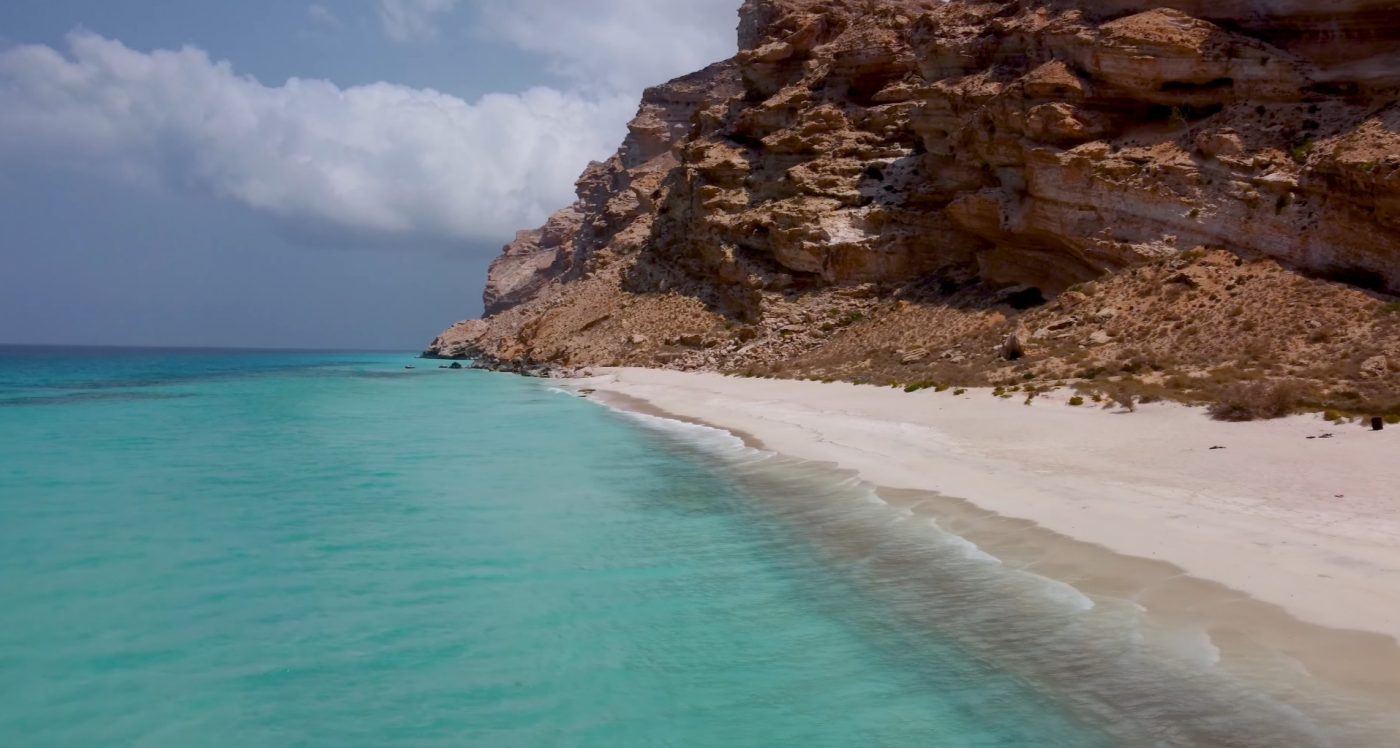
The coastline turns dramatic almost immediately. Tall limestone cliffs stretch for kilometers, rough layers of pale rock stacked above the sea. Some parts look carved, others broken apart by erosion. There are long sections where you can’t even imagine a road reaching this coast.
And honestly that’s part of the appeal.
You pass empty coves, dark rock faces, occasional birds circling in the wind above the cliffs. The Arabian Sea moves slowly beneath the boat. Some days the water stays calm and reflective. Other days the boat jumps across small waves and the ride feels slightly chaotic — nothing dangerous, just lively.
The journey usually lasts somewhere between forty minutes and an hour. Nobody really measures it precisely. Time stretches differently when you’re staring at cliffs and open water for that long.
Then the coastline shifts again. The cliffs pull back. Sand appears ahead.
Shoab Beach slowly comes into view.
What Makes Shoab Beach Special
Shoab isn’t famous because of one spectacular rock formation or some bizarre geological feature. The power of the place is simpler than that. Space. Silence. Distance from everything.
The beach forms a long, wide curve of pale sand backed by low hills and cliffs. The Arabian Sea rolls straight toward the shore without interruption. No harbor structures, no breakwaters, no buildings cutting across the horizon.
Just coastline.
Walk along the beach for a few minutes and you start noticing how empty it feels. Footprints vanish quickly under the wind. Waves flatten the sand again and again. The whole shoreline looks freshly wiped every couple of hours.
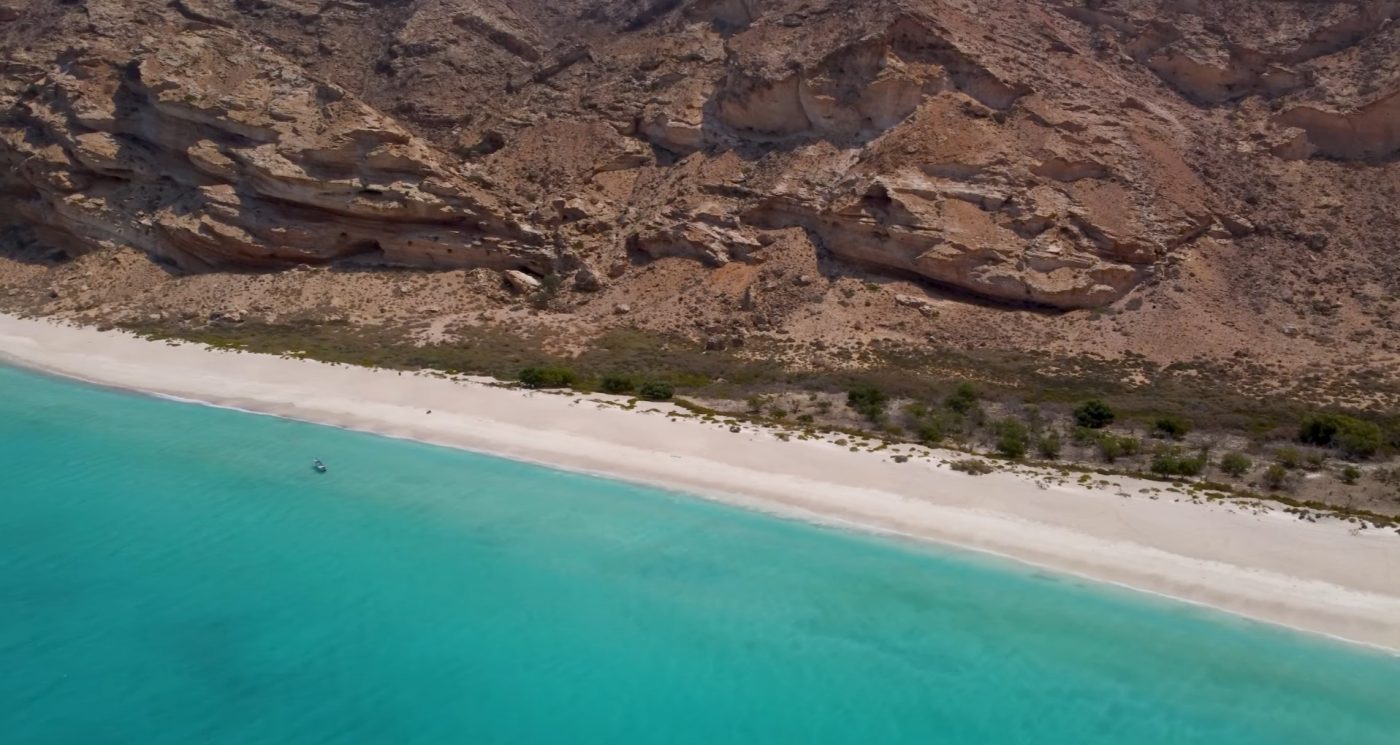
Sometimes small fishing boats appear far offshore. Sometimes dolphins move through the water during the boat ride out here. Seabirds circle above the cliffs or glide low above the waves.
But most of the time… nothing dramatic happens.
And maybe that’s the whole point.
A lot of beaches around the world are busy places. Music, restaurants, endless rows of umbrellas, jet skis buzzing across the water. Shoab feels like the opposite of that entire concept.
You arrive. Walk around. Sit on the sand for a while. Listen to the sea hitting the shore in slow rhythm.
Then eventually the boat comes back.
How Shoab Beach Fits Into a Socotra Travel Route
Shoab Beach almost never appears as a destination by itself. It’s usually part of a wider west coast exploration around Qalansiyah. That stretch of Socotra packs several of the island’s best coastal landscapes into a small area.
Most trips begin earlier in the day at Detwah Lagoon. Travelers walk along the sandbar there, climb the hills above the lagoon, take photos of that famous turquoise basin.
Later everyone heads back toward Qalansiyah where the boats are waiting along the shoreline. From there the route shifts from land to sea.
Cliffs. Open water. Shoab Beach at the end of the ride.
The whole west coast route feels like a sequence of landscapes rather than a checklist of attractions. Lagoon, village, cliffs, then this huge empty beach sitting at the edge of the island.
Route Logic
Typical West Coast Route
Drive from Hadibu
Most west coast journeys start in Hadibu. The road heads across the island toward Qalansiyah, passing dry plains and scattered hills before reaching the coast.
Explore Detwah Lagoon
Travelers usually stop first at Detwah Lagoon. The sandbar, shallow lagoon water and viewpoints above the basin make it one of the most recognizable coastal landscapes on Socotra.
Boat Trip to Shoab Beach
From Qalansiyah small boats follow the cliffs west along the coastline until the shoreline finally opens into Shoab Beach.
The Landscape Around Shoab Beach
Shoab Beach is usually the name people remember, but the surrounding coastline is what really sets the mood. The whole western edge of Socotra changes character here. No villages tucked behind dunes, no roads crawling along the shore. Instead the horizon fills with limestone cliffs — tall, pale, rough-faced things rising straight out of the sea like a wall someone forgot to finish carving.
From the water those cliffs look even bigger. Long vertical faces, broken ledges, shadows sliding across the rock depending on the sun. In many places there’s no obvious way up at all. Just sheer stone and dry slopes above it. It makes sense why this stretch of coast stayed isolated for so long. Even standing on the boat you get that feeling… this isn’t somewhere people casually wandered through centuries ago.
Behind Shoab Beach the terrain climbs slowly into dry hills scattered with rock and scrub. Nothing lush. Just hardy plants clinging to the soil where they can. Wind moves constantly across the area, coming straight off the Arabian Sea, pushing sand along the shoreline and shaping the beach over time. Some days the breeze is soft and warm. Other days it comes through in sudden bursts that kick sand against your legs.
Walk along the shoreline for ten minutes and the scale of Shoab becomes clearer. The beach stretches far beyond the landing point where boats drop visitors. Wide arcs of pale sand curve along the base of the cliffs, and once you move away from the main arrival spot the place starts feeling empty again. Just the sea, the wind, the sound of waves repeating themselves.
There are no permanent buildings across most of this coast. No beach bars, no shaded platforms, nothing like that. Footprints vanish quickly once wind or tide sweeps across the sand. Come back the next morning and the shoreline often looks untouched again — like nobody was there the day before.
Travel Conditions at Shoab Beach
Reaching Shoab Beach means dealing with real coastal conditions. There’s no road access here, so the trip always starts by boat. Weather matters. Sea conditions matter. Sometimes the water is smooth and the ride feels almost slow. Other days the boat bounces across waves along the cliff line and everyone holds onto the rail a little tighter.
Travel Conditions
What to Expect When Visiting Shoab Beach
This kind of setup is normal for remote parts of Socotra. Infrastructure never pushed deeply into the island’s coastline, and honestly that’s part of the charm. You adjust to the environment instead of expecting the place to adjust to you.
Best Time to Visit Shoab Beach
Most travelers head to Shoab between October and April. Sea conditions during these months tend to stay calmer along the west coast, which makes boat travel from Qalansiyah far more reliable. The ride out to the beach becomes part of the experience — cliffs sliding past, seabirds drifting above the water.
Morning trips often feel best. The sea is usually smoother early in the day and the air stays cooler while the sun climbs. Walking the beach at that hour feels easy. Later in the afternoon the heat builds across the sand, though wind from the water can soften things a bit.
June through September is a different story. Strong seasonal winds linked to the monsoon sweep across the Arabian Sea during this period. Waves build along the cliffs and boat travel on the west coast becomes unpredictable. Many trips toward Shoab simply pause until the sea settles again.
How Long to Spend at Shoab Beach
Most visitors stay around two or three hours once the boat reaches Shoab. That’s usually enough time to walk the shoreline, wander along the sand and disappear into quieter sections of the beach.
Boat crews normally anchor nearby while people explore. After a while everyone drifts back toward the landing area — some sunburned, some carrying shells or photos, some just tired from walking through soft sand.
If you keep moving down the coast away from the arrival point, the beach begins to feel completely empty. The cliffs curve slightly, hiding other visitors from view, and suddenly the whole place feels much larger than it first appeared.
Shoab often follows a visit to Detwah Lagoon during a typical west coast route. The lagoon first, then the boat ride past the cliffs, then the beach itself. A long wandering day, honestly.
Practical Travel Facts
| Location | Western coastline of Socotra Island |
|---|---|
| Access | Boat trip from Qalansiyah |
| Main attraction | Remote sandy beach framed by limestone cliffs |
| Typical visit length | 2–3 hours |
| Nearby destinations | Qalansiyah, Detwah Lagoon |
| Travel style | Usually part of a west coast boat excursion |
Final Thoughts on Shoab Beach
Shoab Beach carries that strange feeling Socotra does so well — landscapes that look untouched, almost stubbornly wild. The boat ride along the cliffs already hints at it. Then the beach appears and the scale of the place settles in slowly.
Together with nearby stops like Qalansiyah and Detwah Lagoon, this stretch of coast forms one of the most memorable travel routes on the island. Every stop along the way shows a slightly different face of the western shoreline.
And Shoab… honestly it sticks with people. Not because it’s famous in the usual travel sense. No resorts, no crowds, nothing polished. Just cliffs, wind, open sand and the steady rhythm of the Arabian Sea moving in and out along the shore.