

Qalansiyah is the kind of place that doesn’t announce itself. No dramatic arrival moment, no sign saying you’ve reached something important. The road from Hadibu just keeps going — long, pale stretches of dry coastal ground, bits of stone, wind pushing dust across the asphalt. For a while the sea flickers in and out of view on the left. Then it vanishes again behind dunes or flat scrubland.
But geography has a strange way of hiding important places in plain sight. Qalansiyah sits right at the threshold of Socotra’s western coastline — and once you move past the village the island suddenly starts looking very different.
The coast opens up. Lagoons form behind long sandbars that curve like someone drew them slowly with a compass. Limestone cliffs drop straight toward the sea. Beaches appear between rock formations where there’s almost no development at all. Wind comes off the Arabian Sea and just sweeps across everything.
You start to feel the scale of the island out here. Bigger, emptier, a little rough around the edges.
Because of that, Qalansiyah works less like a destination and more like a starting point. Travelers pass through, stop briefly, then head outward — toward Detwah Lagoon, toward the cliffs, toward remote beaches further along the west coast. The village itself is just the doorway.
Most island routes reach Qalansiyah during the early part of the journey. You leave Hadibu, cross that quiet coastal plain, and suddenly the landscape shifts. It’s usually the moment when visitors realize Socotra isn’t just strange plants and dragon blood trees. The coastline alone could keep you busy for days.
Quick Overview
Qalansiyah at a Glance
A fishing settlement on Socotra’s western coast that quietly serves as the main gateway to Detwah Lagoon and boat routes toward Shoab Beach.
Western coastline of Socotra Island
About 70 km by road across the coastal plain
Starting point for Detwah Lagoon visits and west coast boat trips
Half day or one relaxed afternoon
October to April when sea conditions stay calmer
Detwah Lagoon, Shoab Beach, limestone cliffs along the west coast
What Qalansiyah Is Actually Like
Travel guides sometimes make places sound more curated than they really are. Qalansiyah isn’t curated at all. It’s simply a fishing village that happens to sit beside one of the island’s most beautiful coastal regions.
Boats line the beach along the edge of town — wooden hulls, engines sitting nearby in the sand, ropes tangled into messy piles. Early morning feels quiet here. Fishermen head out before the sun climbs too high and the bay slowly empties.
Later in the day the same boats start appearing again far out on the water. Engines hum softly across the bay as they return. Nets get dragged across the sand. Someone cleans fish near the shoreline while a few others talk and sort gear. Nothing about the routine is built around visitors. It’s just daily life continuing the way it always has.
Walking through the village doesn’t take long. A couple of narrow roads connect houses, small shops, the beach. Kids move between buildings. A few motorbikes pass through slowly. Every now and then you hear someone hammering something near a boat engine.
Most travelers don’t spend much time wandering the settlement itself. And honestly that’s fine. The reason people come here lies just outside the village boundaries.
Leave Qalansiyah and within minutes the landscape shifts — dramatically sometimes. Sandbars appear. Lagoons stretch inland. Cliffs begin shaping the coastline.
Why Qalansiyah Matters on a Socotra Route
The importance of the village becomes obvious once travelers start moving around the surrounding coast. Several of the island’s most striking coastal landscapes sit right here, within easy reach.
First comes Detwah Lagoon.
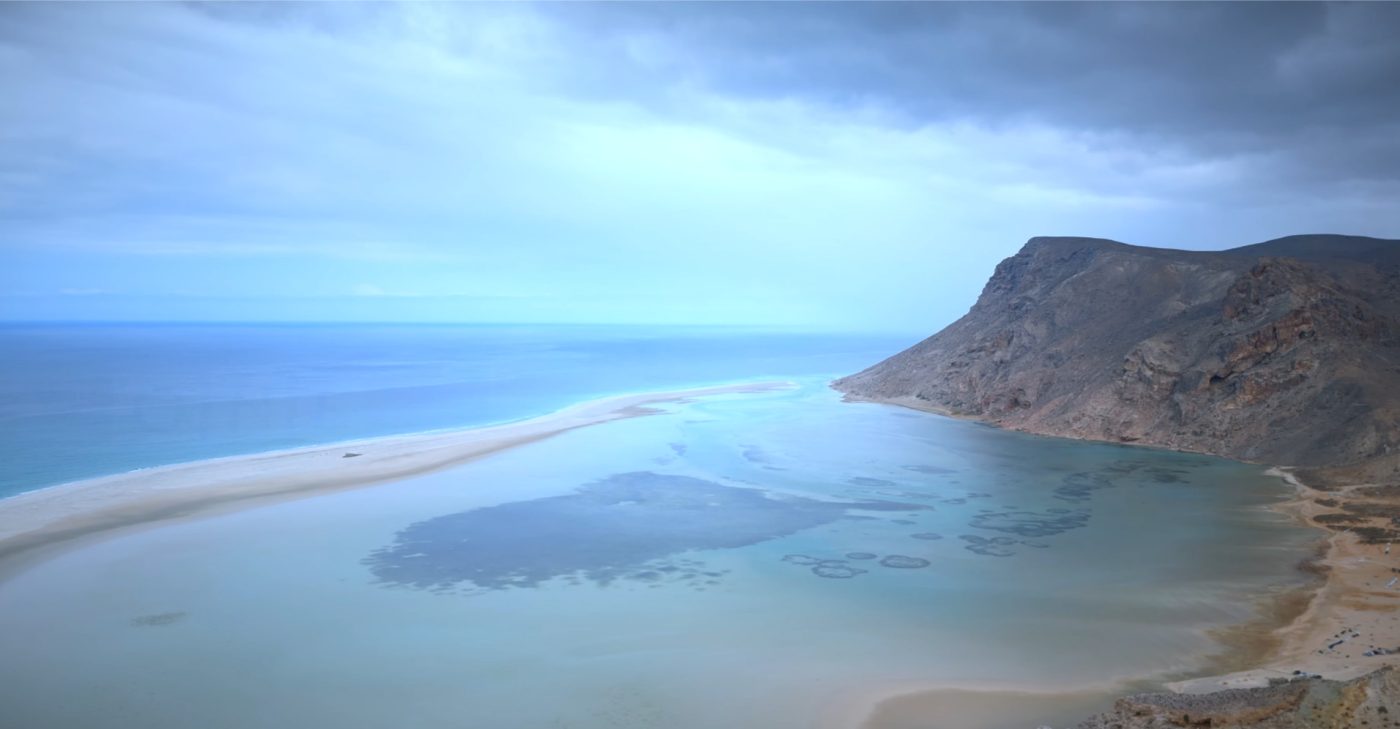
The lagoon sits just outside the village, separated from the open sea by a long curved sandbar. Inside the lagoon the water stays shallow and calm, almost glass-like when the wind drops. On the other side of the sand ridge the Arabian Sea keeps moving, waves rolling in with a completely different energy.
Climb one of the low limestone hills above the lagoon and the whole shape of the place reveals itself. The sandbar forms this wide arc around turquoise water. Pale sand patterns appear across the lagoon floor when the tide pulls back. It’s the kind of view that looks unreal for a moment — like someone carved a perfect curve into the coastline.
Then there’s the boat route.
From the shoreline near Qalansiyah small wooden boats leave for Shoab Beach. The ride itself becomes half the experience. Boats follow the cliffs westward along Socotra’s coastline, passing rock walls, seabirds circling overhead, stretches of empty shore where no roads exist.
After a while the cliffs open and Shoab appears — a long remote beach backed by mountains. No buildings, no real infrastructure. Just sand, water, wind and the occasional fishing boat drifting past.
Which, honestly, feels like the entire west coast in miniature.
Route Logic
How Qalansiyah Fits Into a Typical Socotra Route
Drive from Hadibu
Most journeys toward the west coast begin with the road from Hadibu to Qalansiyah. The route crosses a wide coastal plain where the landscape stays open and quiet for long stretches.
Explore Detwah Lagoon
Shortly after reaching the village travelers usually head toward Detwah Lagoon. Sandbars, shallow water and hilltop viewpoints reveal one of the island’s most recognizable coastal scenes.
Boat Trip to Shoab Beach
Boats leave from the shore near Qalansiyah and travel west along limestone cliffs toward Shoab Beach — one of the most remote stretches of sand anywhere on Socotra’s coastline.
The Landscape Around Qalansiyah
Leave the village behind and the whole mood changes fast. Qalansiyah itself is quiet, low-key, almost restrained. Then a few kilometers later the scenery starts showing off. This is the stretch of Socotra that pulls in photographers, drone people, beach obsessives, anyone who likes coastlines that still look half-forgotten. The land opens, the colors sharpen, the sea starts doing most of the talking.
The centerpiece, no surprise, is Detwah Lagoon. From above it looks absurdly clean in shape — a wide shallow basin filled with clear turquoise water, protected by a long curved sandbar that cuts across the edge like a pale ribbon. Inside the lagoon the water stays calmer, softer, almost glassy on good days. Outside, beyond that sandy barrier, the Arabian Sea feels bigger, rougher, more exposed.
At low tide the whole place gets even better. Parts of the lagoon floor begin to show through the water, and suddenly you see rippled sand, little pools, strange textures, tiny shifts in color that make the basin look alive. Fish move through the shallows. Birds pick their way along the exposed edges. Nothing theatrical, but the scene has detail everywhere. The kind you notice only when you stop moving for a minute.
The hills around the lagoon matter more than people think. Without them, you get a nice beach view. With them, you get the full shape of the place. Short climbs lead to rocky ridges where the lagoon opens below in one sweeping curve — white sand, still water, dry hills, the horizon pushed far back. It has that aerial, almost unreal look Socotra keeps pulling off again and again.
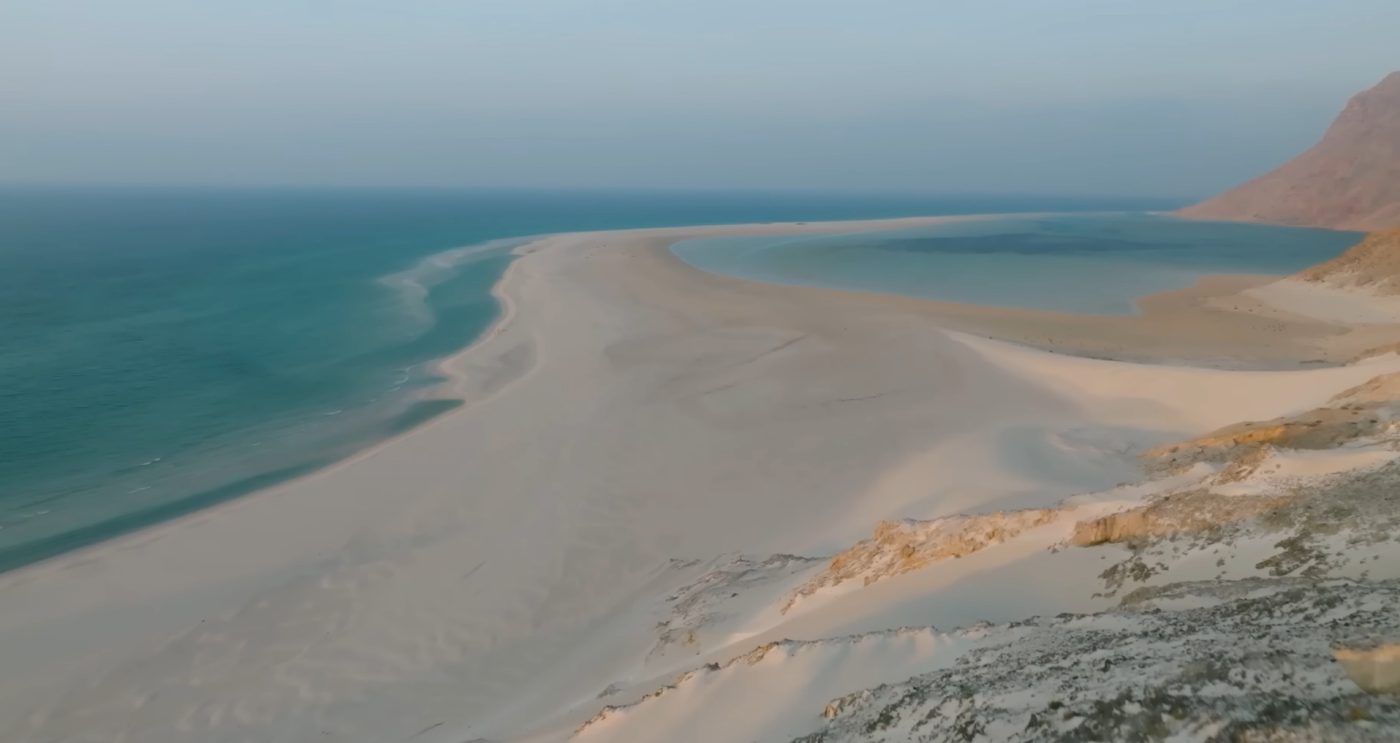
Head farther west and the coast toughens up. Limestone cliffs rise directly from the sea, forming steep rock walls that feel harsher than the soft lagoon scenery behind you. When the wind kicks up, waves hit the base of the cliffs hard enough to change the whole atmosphere. Suddenly it’s less postcard, more edge-of-the-map stuff.
Beyond those cliffs sits Shoab Beach, one of the most isolated stretches of sand on the island. And yeah, people call lots of places remote. This one actually earns it. There are almost no permanent structures along that section of coast. You reach it by boat from Qalansiyah, moving along the cliff line for close to an hour, and then the landscape opens without warning into a broad sandy shore that feels detached from everything behind it.
That mix is what gives the west coast its pull: lagoon, cliffs, open beach, sea, wind, bare rock, long empty views. Other parts of Socotra lean into mountains or wadis or strange tree-covered plateaus. Around Qalansiyah the coastline does the heavy lifting. It feels broader, saltier, more exposed. Less sheltered. Honestly, better.
Travel Conditions and Practical Reality
Getting to Qalansiyah is not hard by Socotra standards, but that doesn’t mean it feels polished. The island still runs on rough logistics, basic infrastructure and a kind of beautiful inconvenience that would annoy some people and completely hook others. Most visits happen as part of guided overland routes using 4×4 vehicles, because regular transport just doesn’t make much sense once you start moving beyond the main road network.
Travel Conditions
What to Expect When Visiting Qalansiyah
That’s the practical side of it. The more honest version is simpler: Qalansiyah works because it hasn’t been overbuilt. Roads are rough in places. Services are minimal. Plans stay a little loose. Sea conditions matter. And I think that’s exactly why the place still lands so hard. The remoteness isn’t a branding trick. It’s real.
You feel it in small ways. Fewer structures. Less noise. No fake atmosphere layered on top of the landscape. People come here for coastal scenery, lagoon viewpoints, boat excursions, quiet beaches, sunset light, raw island geography. Comfort is somewhere lower on the list. Fair enough.
Best Time to Visit Qalansiyah
Qalansiyah is usually best visited between October and April, when the weather is calmer and the west coast is more workable overall. During these months the heat is easier to handle, the sea is often steadier, and boat trips toward Shoab Beach are more likely to operate without drama.
This is also when the lagoon tends to look its best. Clearer light, calmer water, stronger color contrast between the white sandbar and the turquoise basin. Mornings can look ridiculously clean. Late afternoons are better if you want warmer light and softer shadows across the hills.
By May the heat starts rising across the coastal plain and you feel it. Not in some abstract weather-report way. I mean you step out of the vehicle and the air has weight. Midday becomes the annoying part of the day, especially where there’s little shade and the terrain reflects heat back at you.
From June to September the monsoon period brings strong seasonal winds to Socotra. That changes everything on the west coast. Rougher seas, harder crossings, more disruption to boat activity, and a general sense that the island is shifting into a less accessible version of itself. Travel still exists, sure, but this is not the window most people want for Qalansiyah if lagoon views and coastal boat routes are high on the list.
How Long to Spend in Qalansiyah
For most travelers, Qalansiyah works best as a half-day or full-day stop inside a broader Socotra itinerary. The village itself doesn’t need much time. You’re not coming for museums, long urban walks or layered cultural sightseeing. You’re coming because the surrounding landscape fans outward in several directions and keeps pulling you away from the settlement.
A pretty standard visit starts with a morning drive from Hadibu. Once travelers arrive, they usually continue toward the Detwah Lagoon area rather than spending much time inside the village center. From there the day can stretch in different ways. Some people walk the shoreline, some climb ridges for panoramic views, some just stay parked at the viewpoints taking too many photos because the color of the water keeps changing.
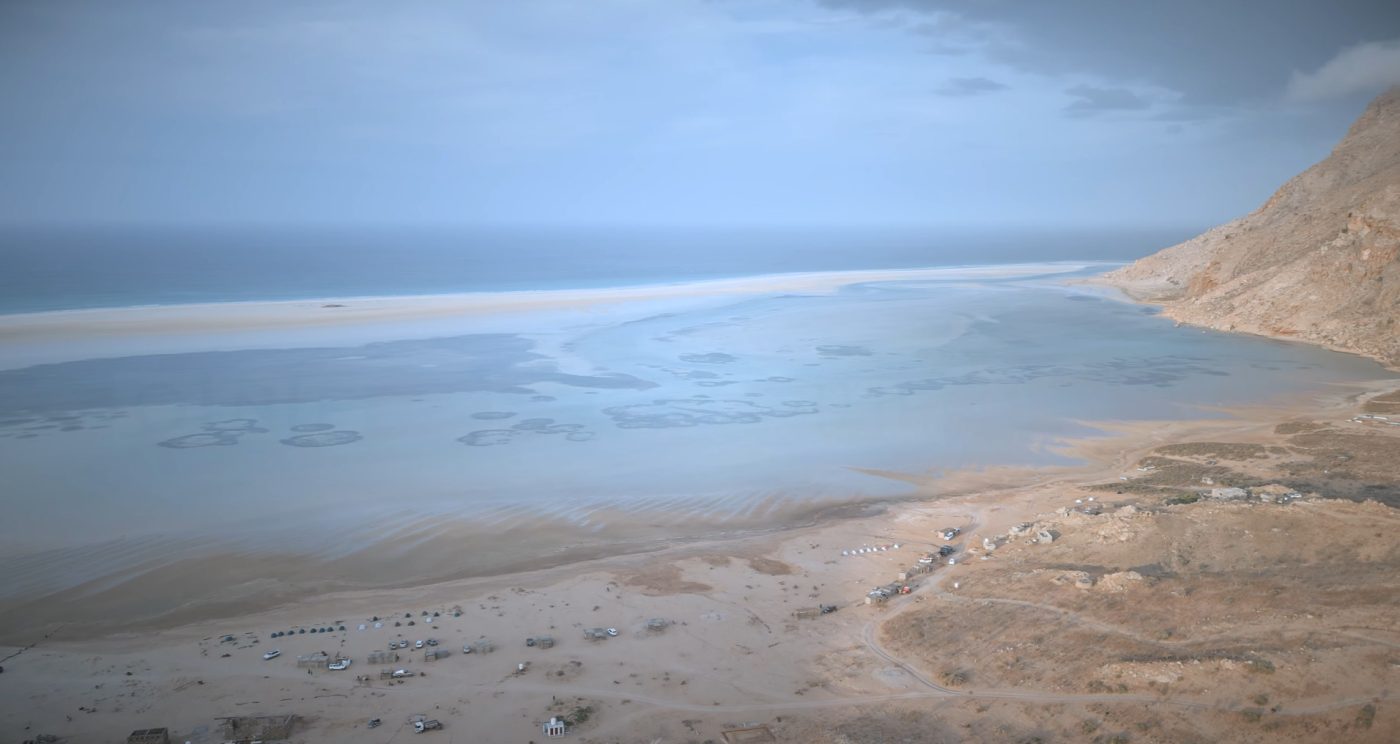
And honestly, that happens. You think it’s a quick stop, then an hour disappears because the light shifts or the tide exposes a different pattern across the lagoon floor.
If a Shoab Beach boat trip is part of the plan, Qalansiyah becomes a full-day destination almost automatically. The outbound ride, the coastal views, the time on the beach, the return trip — it all adds up. It should. Rushing that section would be dumb.
Some itineraries also include an overnight stay near Detwah Lagoon or elsewhere along the west coast route. That changes the experience completely. Sunset softens the whole basin. Sunrise can feel even stranger — quieter, cooler, less crowded in mood even when there are other travelers around. Camping here makes sense if the route allows it, not because the village has loads to do, but because the landscape is better at the edges of the day.
Practical Travel Facts
| Location | West coast of Socotra Island |
|---|---|
| Access | Road travel from Hadibu followed by short coastal drives toward lagoon viewpoints and shoreline areas |
| Main attraction | Detwah Lagoon, west coast scenery and access to coastal boat routes |
| Boat trips | Departures toward Shoab Beach depending on wind and sea conditions |
| Typical visit length | Half day to full day |
| Facilities | Basic village infrastructure, small local shops and limited services |
Final Thoughts on Qalansiyah
Qalansiyah doesn’t really impress in the loud way some places do. That’s part of its charm, maybe part of its trick too. The village looks simple, almost modest, and then the coastline around it starts unfolding into lagoons, cliffs, beaches and long exposed views that feel much bigger than the settlement itself.
The village remains grounded in local life — fishing boats, quiet streets, basic shops, routines that have nothing to do with outside expectations. It hasn’t been polished into a performance. You feel that right away. Then a few minutes later you’re standing above Detwah Lagoon or climbing into a boat toward Shoab Beach and the whole area suddenly makes sense.
For people moving across Socotra, Qalansiyah is less about the village in isolation and more about what it unlocks. It opens the door to the island’s west coast scenery, its lagoon landscapes, its cliff-bound boat routes, its remote beaches, its broad salt-heavy horizon. That’s the real pull. The place connects you to one of the wildest coastal sections on the island, and once you see that, the village stops feeling small.