

On the northeastern side of Socotra, above the coastal plain and tucked into the limestone mountains, a narrow trail climbs toward one of the island’s most impressive natural sites. Hidden inside the cliffs is Hoq Cave, the largest known cave system on Socotra and one of those places that feels substantial even before you reach it.
You do not just pull up beside it and stroll in. The approach matters. The route begins below and rises steadily across rocky terrain, with the path climbing toward the mountain wall above the Arabian Sea. As you gain elevation, the landscape opens wider and wider, and the coastline starts looking sharper, emptier, more dramatic.
Then there is the cave itself. Hoq is not some tiny opening with a few rocks inside and a guide pointing at shadows. It extends deep into the mountain, and the interior contains long chambers, mineral formations, stalactites, stalagmites and thick limestone textures shaped over an absurd stretch of time.
That combination is what makes the place work so well. A mountain hike, a giant cave entrance, coastal views behind you, darkness ahead. Honestly, it is one of the most satisfying natural stops on the island because the experience has layers to it. The walk in, the geology, the scale, the feeling of stepping out of bright heat into underground silence.
Hoq Cave at a Glance
The largest cave system on Socotra, located in the limestone mountains above the island’s northeastern coastline.
Northeastern Socotra
Limestone cave system
Around 1–2 km uphill
2–3 hours
The Geological Formation of Hoq Cave
Hoq Cave formed inside the limestone massif of northeastern Socotra over extremely long geological periods. Water slowly moved through cracks and weak points in the rock, dissolving parts of the limestone and gradually creating underground passageways, voids and larger chambers inside the mountain.
That process did not happen quickly, obviously. It took ages. Water seeped through the rock, carried dissolved minerals, and then left behind tiny deposits of calcium carbonate as conditions changed inside the cave. Those deposits built up bit by bit across the ceiling, walls and floor.
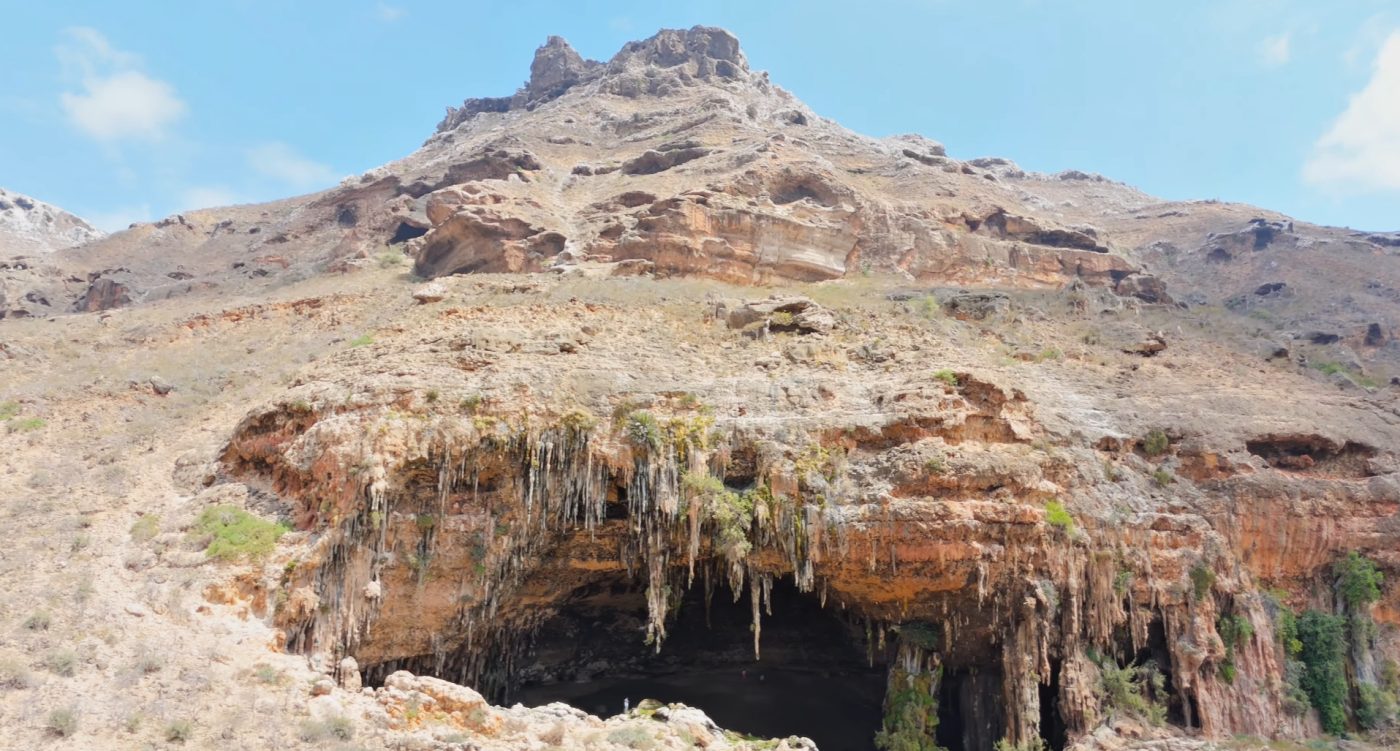
Over time, stalactites formed overhead and stalagmites rose from below. In some places the formations look delicate, almost brittle. In others they appear thick, heavy and column-like, as if the cave is slowly building its own architecture from the inside out.
Some mineral features resemble curtains, drips frozen in stone, or rough pillars joining floor to ceiling. Others are less dramatic at first glance, but the longer you look the stranger they get. Hoq is good like that. It keeps revealing detail once your eyes adjust and your brain stops expecting normal cave shapes, whatever that means.
The cave system extends for several kilometers into the mountain, though most visits cover only part of the accessible interior. Even that partial experience is enough to show the size of the place. The chambers do not feel cramped or trivial. They feel deep, old and spatially serious.
The Hike to the Cave Entrance
One of the defining parts of a Hoq Cave visit is the hike to reach the entrance. The trail begins near the base of the mountain and climbs upward across rocky slopes toward the cave opening high in the limestone wall.
The distance is not especially long on paper, but the incline and the terrain make it feel more substantial than a casual stroll. The path is uneven, the ground can be loose in places, and the climb usually takes around forty-five minutes to an hour depending on pace, heat and how often people stop to look back at the view.
And people do stop. A lot.
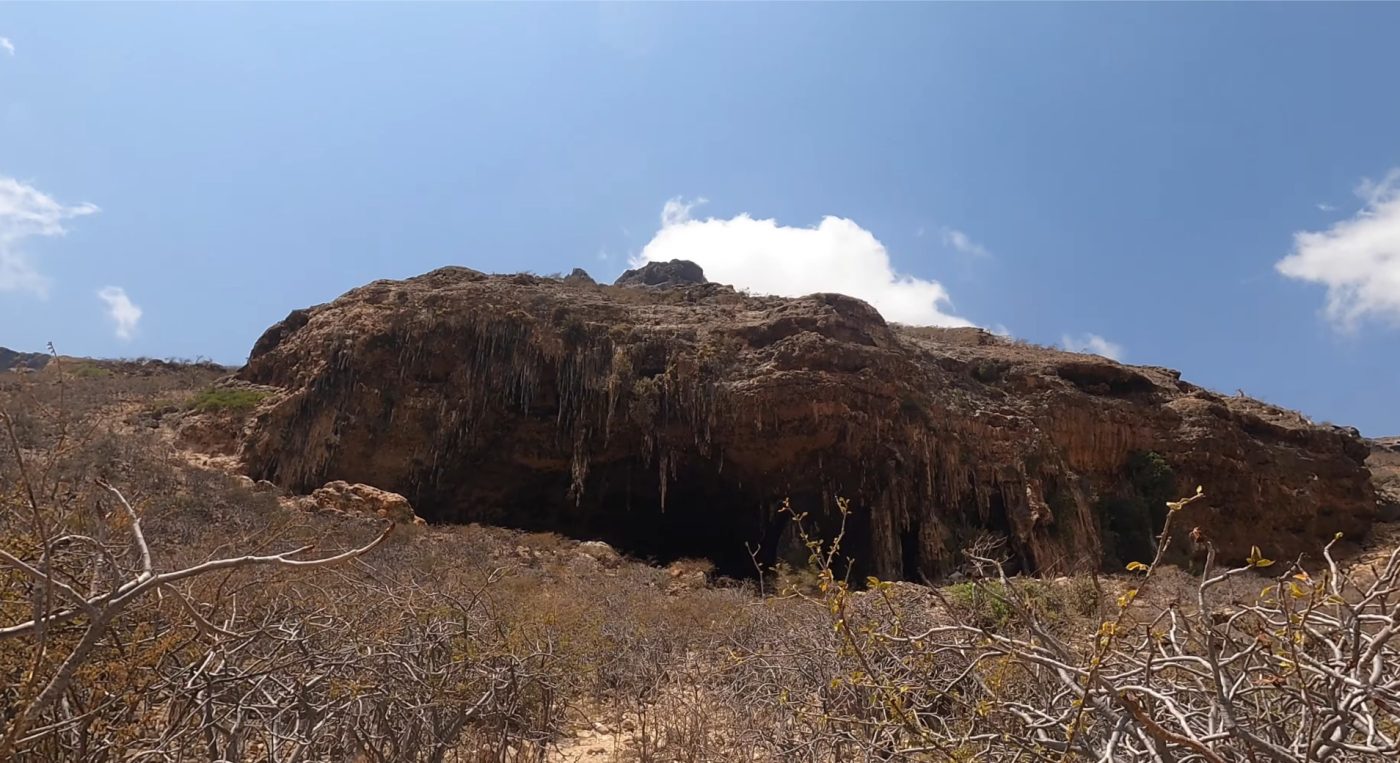
Because the higher the trail climbs, the more the landscape begins to unfold behind you. The Arabian Sea appears in the distance, the coastline sharpens, and the northeastern side of Socotra starts looking broader and more rugged than it does from below. The contrast between sea and mountain gets stronger with every stretch of elevation.
That is one reason the approach never feels like dead time. Even before the cave entrance comes into view, the route is already doing something. It is building atmosphere. Heat, rock, open air, then the dark mouth of the cave ahead in the cliff.
I think that progression matters more than people admit. If Hoq were reachable by flat roadside access, it would lose part of its force.
Inside the Cave
The shift begins the moment you enter. Outside, the trail is bright, exposed and dry. Inside Hoq Cave, the light drops away almost instantly and the temperature feels cooler. Sound changes too. The air becomes stiller, the space more enclosed, and the cave starts working on your sense of scale in a completely different way.
Visitors usually use flashlights or headlamps to move through the interior and to pick out the formations along the walls and ceiling. Once light hits the mineral surfaces, textures start appearing everywhere — pale rock, darker deposits, wet-looking surfaces in places, long hanging shapes above, uneven build-ups below.
Some chambers contain large stalactites descending like stone spikes or mineral icicles. In other sections stalagmites rise from the floor, formed by the same mineral-rich water working slowly upward through centuries of drip by drip accumulation. There are sections where the cave feels open and elongated, then places where the formations crowd closer and the textures become denser.
It is not only visually interesting. It feels slow. Ancient in a very literal way.
Each feature inside the cave is a record of time moving almost imperceptibly. Mineral deposit after mineral deposit, layer after layer, until these strange stone forms emerge. Standing in front of them makes the normal human sense of duration feel kind of ridiculous for a minute.
And Hoq has that specific cave mood too — part wonder, part unease, part fascination. Not fear exactly. Just the awareness that you are inside a mountain, following a passage created long before any route, trail or travel itinerary ever existed.
Why Hoq Cave Feels Different from Other Natural Stops on Socotra
A lot of Socotra’s most famous places are about open landscapes. Lagoons, cliffs, dunes, plateaus, dragon blood tree highlands, panoramic viewpoints. Hoq Cave flips that pattern completely.
Instead of looking outward across massive scenery, you move inward. Into rock. Into darkness. Into geological space that hides its scale until you are already inside it.
That alone makes it stand out on a Socotra route. But there is also the contrast between the hike and the cave itself. First you are on a hot mountainside above the sea, with wide views and hard sunlight. Then you cross the threshold and the whole environment changes. Cool air. Mineral formations. Dim chambers. The island goes from expansive to enclosed in a few steps.
To be fair, some natural attractions get remembered mostly because of photographs. Hoq is more experiential than that. The photos matter less than the transition into the cave, the feeling of depth, the scale of the chambers, the odd patience of the formations.
It stays with people for different reasons than the beaches do.
How Hoq Cave Fits Into a Socotra Travel Route
Hoq Cave is usually visited as part of a route through northeastern Socotra. It fits naturally into journeys that move from mountain and plateau scenery toward the eastern coast, especially after inland stops such as Homhil.
That sequence works well because the route keeps changing character. After viewpoints, endemic plant landscapes and highland terrain, Hoq adds a geological stop that feels more physical and immersive. It breaks up the trip in a good way.
Once the cave visit is finished, many itineraries continue toward the eastern coastline and nearby highlights such as Arher Dunes. That creates a strong contrast inside one route segment: mountain hike and limestone cave first, then giant coastal dunes and open shoreline later.
Most visits to Hoq take a few hours in total, including the ascent, time inside the cave and the return hike. It is not usually treated as a rushed roadside stop, and that is probably for the best. The place deserves more than a quick box-tick.
It has substance. Real one.
Typical East Route
Homhil Plateau
Travelers begin in the northeastern highlands around Homhil, where mountain viewpoints, endemic vegetation and the famous natural pool define the route.
Hoq Cave
The journey continues to Hoq Cave, where visitors hike uphill to the cave entrance and explore the large interior chambers inside the limestone mountain.
Arher Dunes
After the cave, many routes continue toward Arher Dunes, where towering sand formations meet the coast on the eastern side of Socotra.
Travel Conditions for Visiting Hoq Cave
Hoq Cave might be one of the easier cave systems to reach on Socotra, but the entrance doesn’t sit next to a road. You still have to earn it a little. The trail begins at the base of tall limestone cliffs and then climbs steadily upward toward the dark opening carved high above the coastal plain.
The path itself is visible most of the way, though it isn’t perfectly smooth. Loose stones shift underfoot, rocky steps appear here and there, and parts of the slope feel exposed. The distance isn’t huge, yet the climb can feel longer than it looks from below. Most people take somewhere between forty-five minutes and an hour to reach the cave entrance.
The trail faces the northern coastline, which means the sun hits it hard during the middle of the day. Heat builds quickly along the rock. Many travelers start the hike early while the air still feels cooler and the light across the sea looks clearer.
What to Expect When Visiting Hoq Cave
Most visitors end up finding the climb manageable. The views along the trail stretch across the coastline and the cave itself… well, once you step inside, the effort suddenly feels worth it.
Best Time to Visit Hoq Cave
The most comfortable season for exploring Hoq Cave usually falls between October and April. Weather across Socotra stays calmer during these months and temperatures remain easier for hiking compared with the hotter parts of the year.
Early morning climbs are especially popular. Starting the hike before the midday heat sets in makes the walk far more pleasant. The air feels lighter, and the coastal views below the cliffs look almost endless.
Late afternoon visits also happen, though timing matters. Anyone heading up later in the day usually keeps an eye on the clock so the descent doesn’t happen after sunset.
From June through September strong seasonal winds pass through parts of the island. The cave remains accessible, but the surrounding terrain can feel hotter and sometimes dusty during that period.
How Long to Spend at Hoq Cave
A full visit to Hoq Cave usually takes around two to three hours. That includes the hike up to the entrance, time wandering through the interior chambers, and the walk back down the mountain trail.
Inside the cave many visitors explore the first sections where the largest stalactites and stalagmites appear. Massive stone formations hang from the ceiling while others rise from the floor, slowly shaped over thousands of years.
The cave often fits into a broader travel route through northeastern Socotra. Travelers may arrive from the highland landscapes of Homhil earlier in the day and later continue toward coastal scenery like Arher Dunes.
Because of that route, Hoq Cave quietly connects two different sides of the island — mountains behind you, ocean landscapes waiting further east.
Practical Travel Facts
| Location | Northeastern mountains of Socotra Island |
|---|---|
| Landscape type | Limestone cave system |
| Hiking distance | Approximately 1–2 km uphill |
| Typical visit length | 2–3 hours |
| Nearby destinations | Homhil, Arher Dunes |
| Main attraction | Large stalactite and stalagmite formations |
Final Thoughts on Hoq Cave
Hoq Cave offers a completely different side of Socotra’s natural world. The island is famous for its strange trees and remote beaches, yet stepping into this massive limestone cavern reveals something deeper — literally and figuratively.
The hike through the mountains, the sudden cool air inside the cave, the towering formations carved slowly by dripping water… it all feels like entering a hidden layer of the island’s landscape.
Together with nearby places like Homhil and the sweeping sand slopes of Arher Dunes, Hoq Cave becomes part of the northeastern exploration route across Socotra.
For travelers drawn to geology or just a bit of adventure, the cave tends to stick in memory long after the climb back down the mountain.