

On the eastern side of Socotra, the island changes shape yet again. After mountain terrain and inland stops like Hoq Cave, the road drops back toward the coast and the scenery suddenly becomes almost absurd. Sand appears where it should not logically feel this big, this steep, this dominant.
This is Arher.
Here the mountains meet the sea, and between them rise huge sand formations known as the Arher Dunes. They do not sit out on a flat desert plain the way people usually imagine dunes. They climb directly from the coastal ground and press up against the dark cliff wall behind them, creating one of the strangest and most recognizable landscapes on Socotra.
That contrast is what hits first. Bright sand. Dark rock. Blue sea nearby. Everything exaggerated, everything cleanly separated, almost like the place was designed to be photographed. But in person it feels less polished than that. More physical. Windy, open, slightly harsh.
For a lot of travelers exploring eastern Socotra, Arher ends up being one of those stops that stays in the head longer than expected. Not only because it looks dramatic. Because the whole setting feels off in the best possible way.
Arher Dunes at a Glance
Massive coastal sand dunes rising between mountain cliffs and the Arabian Sea on the eastern side of Socotra.
Eastern coast of Socotra
Coastal sand dunes
Some dunes rise over 200 meters
1–2 hours or overnight camping
The Unique Landscape of Arher Dunes
Arher does not look like a classic desert. That is the first thing worth getting straight. These dunes are coastal, not inland, and they do not stretch endlessly across a flat horizon. Instead, they gather at the foot of steep mountain cliffs where wind has pushed sand inland over long periods until huge accumulations built up against the rock wall.
That process created towering sand slopes that rise along the mountain base like frozen waves. Some of them climb more than two hundred meters above the surrounding terrain, which is wild when you are standing there and trying to make visual sense of it. The dunes feel bigger in person than they do in photographs. Much bigger.
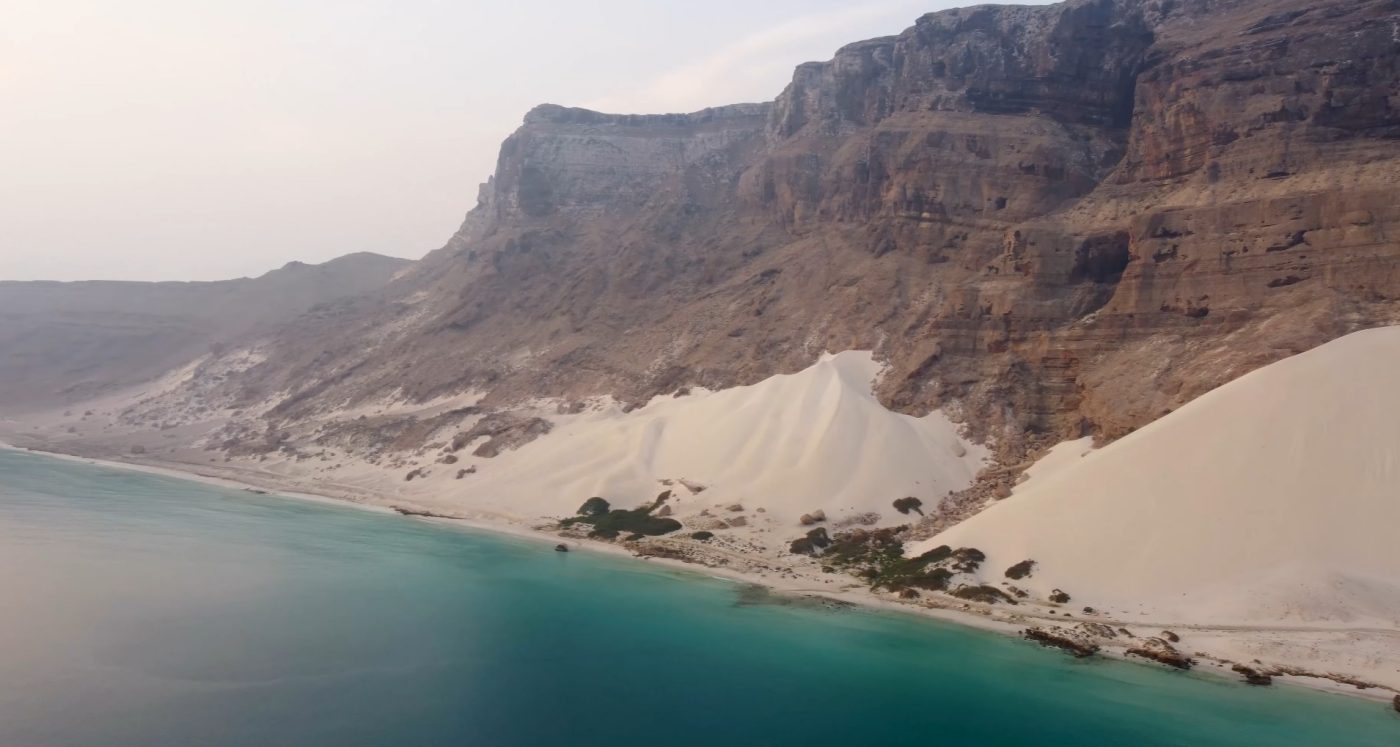
From farther away, the sand can look smooth and almost soft, pale curves leaning up into the darker cliff behind. The shapes are clean, sweeping, elegant even. Then you get closer and the scale becomes a lot more intimidating. The slope is steeper than it seems. The sand is looser than it looks. The whole formation feels less decorative and more like a giant unstable wall of light-colored earth.
And then the sea is right there nearby, which somehow makes the whole thing even stranger.
That collision of landforms is really the soul of Arher. Mountains, dunes, coastline, wind, sea spray somewhere in the distance. Very few places manage to hold all of that in one view without feeling messy. Arher does.
Climbing the Dunes
One of the most memorable things people do at Arher is climb the dunes themselves. At least partway. Some visitors head up the lower and middle slopes for the views, and some try to push much higher depending on conditions, energy and how masochistic they feel that day.
Because the climb is deceptive.
From below it can look manageable in a casual way. Then you start walking and each step sinks into loose sand, your feet slide back slightly, and progress becomes slower than expected almost immediately. The dune gives just enough resistance to make you work for every section of elevation.
It is not technical. It is just annoying in a very honest way.
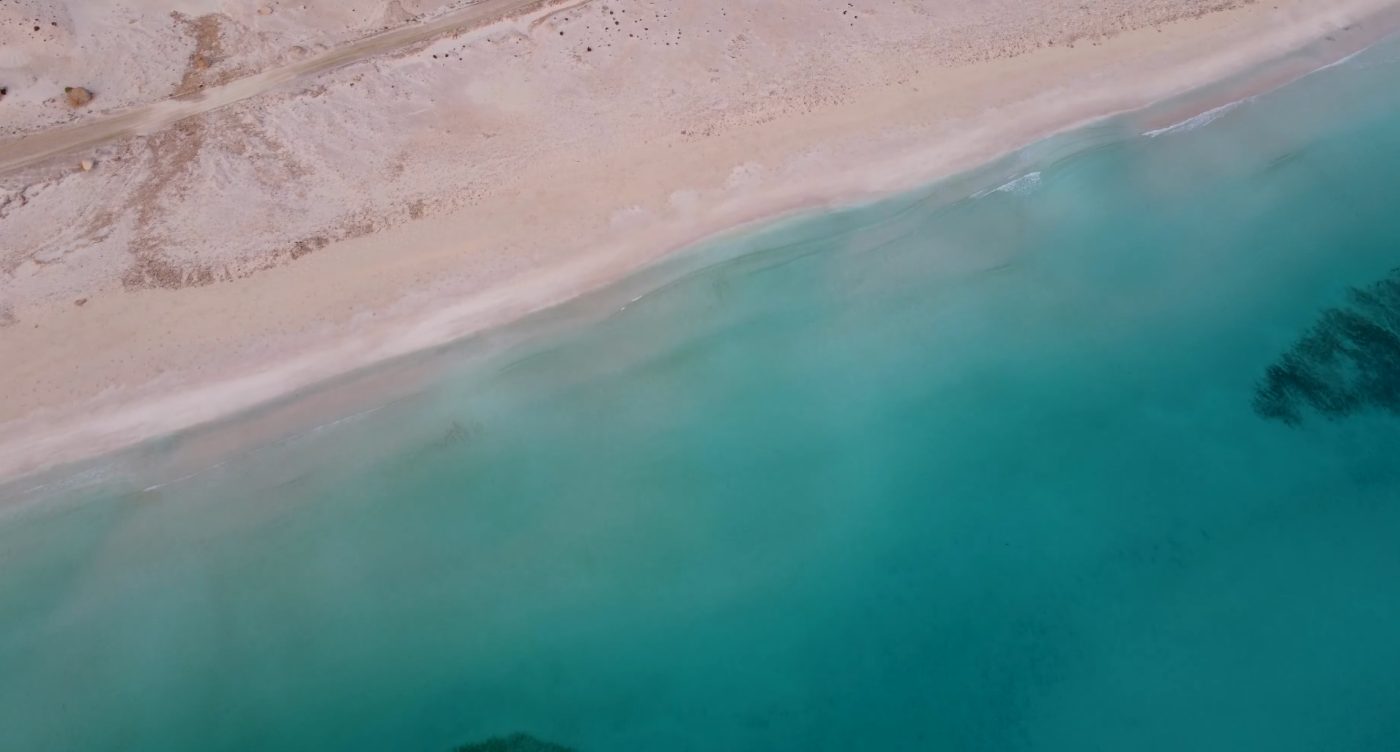
Still, the higher you go, the better the payoff gets. The coastline spreads out, the Arabian Sea opens toward the horizon, and the mountains behind the dunes start looking even more severe from the angle above. You begin to understand the full geometry of the place — sand pressed into cliff, open sea beyond, beach and plain below.
Early morning and late afternoon usually feel far better for climbing than the middle of the day. Midday sun bouncing off pale sand can be brutal, and the reflected heat adds this extra layer of irritation that nobody really needs. Softer light makes the whole area more pleasant anyway, and the colors are better too.
Camping at Arher
A lot of Socotra itineraries include an overnight stop near the dunes, and honestly that makes sense. Arher is one of those landscapes that changes a lot once the harsh daylight softens. Sunset and sunrise both suit the place.
As evening comes in, the dunes shift color slowly. Pale gold deepens into warmer orange tones, shadows stretch along the sand, and the mountain backdrop starts looking darker and heavier by comparison. The coastline quiets down. Wind moves across the dunes. The whole setting becomes less exposed and more atmospheric.
At night the area can feel intensely still. You hear wind passing over sand, maybe waves reaching the nearby shoreline, not much else. No big development, no urban glow, no clutter. Just open space and darkness.
Then morning changes it all again.
The first light softens the dune faces and brings back detail to the sand surface. Subtle ridges appear. Colors shift from muted gray-gold into warmer tones. The mountains behind remain stern and dark for longer, so the contrast returns in a slightly different way than it had the evening before.
For many travelers, these hours around dusk and dawn become the real Arher memory, even more than the climb itself. The landscape feels larger then. Calmer too.
Why Arher Feels So Different from Other Places on Socotra
Socotra has beaches, cliffs, lagoons, plateaus, caves, dragon blood tree forests, mountain viewpoints — the island is already overloaded with visual variety. Arher still manages to stand apart because the scene is so bluntly dramatic.
There is nothing subtle about giant dunes leaning into a mountain wall beside the sea.
Other places on the island often unfold gradually. A road approaches a village. A plateau opens into a canyon. A trail leads to a cave. Arher is more immediate. You see it and the logic of the place hits at once, even if the scale takes longer to absorb.
Maybe that is why it becomes such a highlight. It is not delicate scenery. It is elemental. Sand, cliff, coastline, wind. Big shapes doing big things.
And to be fair, some landscapes are beautiful in a way that feels almost too gentle. Arher is beautiful in a more muscular, slightly ridiculous way. It has attitude.
How Arher Dunes Fit Into a Socotra Travel Route
Arher Dunes usually appear on the eastern route across Socotra. Many travelers reach the area after visiting Hoq Cave in the nearby mountains, which makes for a pretty satisfying contrast inside one route segment: first a limestone cave hidden inside the highlands, then giant coastal sand dunes pressed against the cliffs.
That sequence works really well because it keeps the eastern side of the island from feeling repetitive. The route moves from enclosed geological space to one of the most open and exposed coastal landscapes on Socotra.
After Arher, many itineraries continue along the coast toward Ras Erissel, the eastern tip of the island where sea and ocean currents meet and the coastline becomes even more remote. In that sense, Arher often acts as both a major destination and a transition point on the east coast journey.
Some visitors stay briefly, climb a little, take photographs and move on. Others camp overnight and let the place breathe. I think Arher rewards the second approach more. It is too large, too strange and too atmospheric to reduce to a quick roadside stop.
Typical East Coast Route
Hoq Cave
Travelers begin by exploring the limestone cave system at Hoq Cave, where a mountain hike leads into the island’s largest cave.
Arher Dunes
The route continues to Arher, where visitors climb the towering coastal sand dunes, walk the shoreline and experience one of the most unusual landscapes on Socotra.
Ras Erissel
From the dunes, many itineraries continue toward Ras Erissel at the eastern tip of Socotra, where the coastline becomes even more remote and dramatic.
Travel Conditions Around Arher Dunes
Arher Dunes sit right along the eastern coastline of Socotra, but reaching them still takes a bit of work. The route usually crosses the rugged terrain near Hoq Cave before the road drops down toward the coastal plain. Mountains behind you, sea somewhere ahead, and the landscape slowly flattening out as the sand begins to take over.
The last stretch of road approaches the beach where the dunes rise almost absurdly high against the mountain wall. Vehicles normally stop near the shoreline. From there people walk the rest of the way toward the base of the dunes, sometimes wandering along the beach first just to take in how strange the whole place looks.
The ground around Arher shifts constantly between loose sand, rough coastal rock and wide open beach. Climbing the dunes themselves is another story. The slopes look smooth from below, but once you start walking up them you realize how deep the sand is. Each step slides back a little.
What to Expect When Visiting Arher Dunes
Even with those conditions the dunes remain surprisingly easy to explore. Many visitors simply wander along the base of the slopes, while others slowly climb partway up for a wider view of the coastline.
Best Time to Visit Arher Dunes
Most travelers reach Arher between October and April when weather across Socotra feels calmer and moving around the island is easier.
Sunrise and sunset tend to steal the show here. Low sunlight stretches long shadows across the dunes and suddenly the sand reveals all its curves and ridges. The place looks different every few minutes as the light changes.
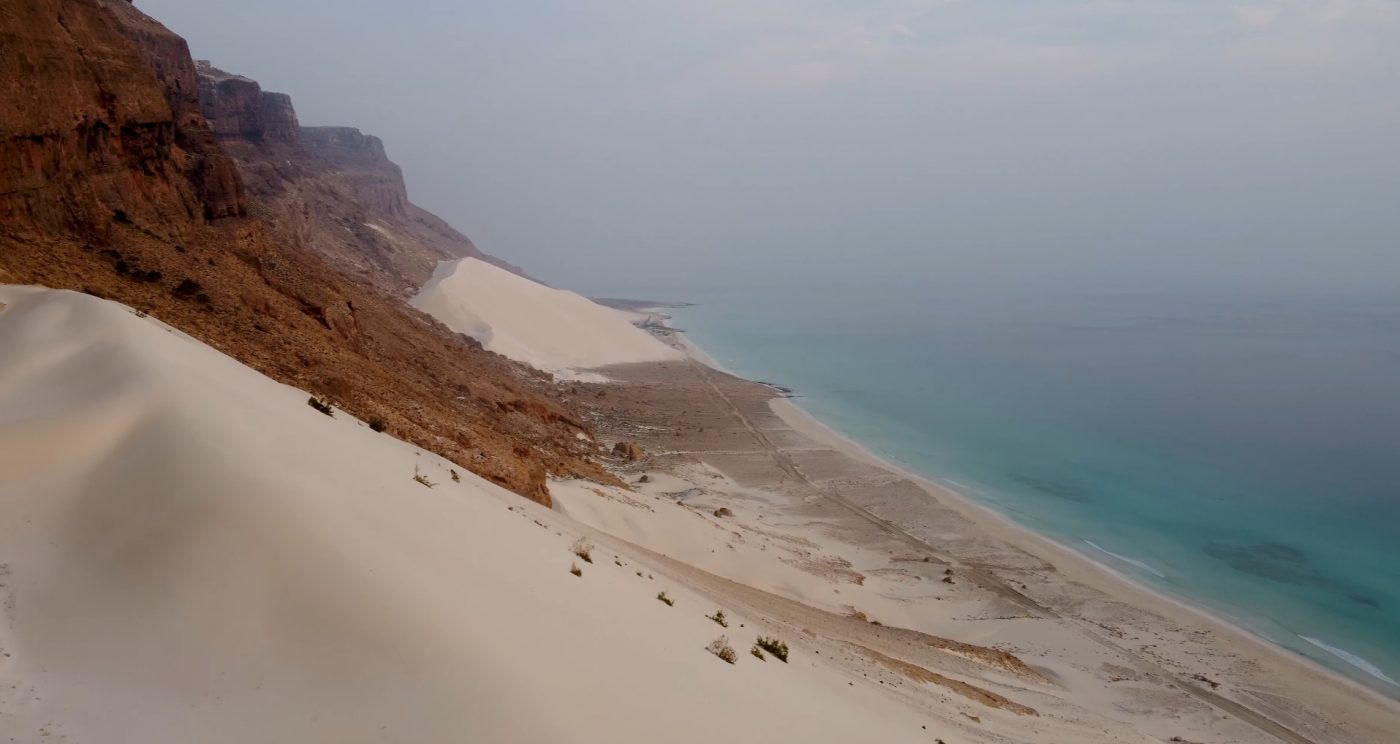
Midday visits can still be impressive — the dunes look enormous under bright sun — but the heat reflecting off the sand makes climbing the slopes more demanding.
From June through September strong seasonal winds sweep across the island. Those winds actually help shape the dunes, though they can also make the exposed coastline feel rougher for travelers.
How Long to Spend at Arher Dunes
Most visitors spend one or two hours wandering around the dunes and nearby beach. That’s usually enough time to climb partway up the sand slopes and take in the wide views along the coast.
Arher also happens to be one of the favorite camping locations on Socotra. Many travel routes include an overnight stay near the dunes so visitors can experience sunset and sunrise in the same place.
After exploring the dunes, some travelers continue along the eastern coastline toward Ras Erissel, the easternmost tip of the island.
Within a short stretch of road the scenery shifts again — mountain caves behind you, towering dunes at your feet, and then rocky coastal headlands stretching toward the open sea.
Practical Travel Facts
| Location | Eastern coastline of Socotra Island |
|---|---|
| Landscape type | Massive coastal sand dunes |
| Dune height | Up to around 200 meters |
| Typical visit length | 1–2 hours or overnight camping |
| Nearby destinations | Hoq Cave, Ras Erissel |
| Main attraction | Climbing dunes and wide coastal views |
Final Thoughts on Arher Dunes
Arher Dunes show one of the strangest landscapes on Socotra. Huge walls of sand rise straight up against dark mountain cliffs, something you rarely see anywhere else.
With the Arabian Sea stretching beside the beach and the dunes towering above the shoreline, the whole place feels wide and slightly unreal.
Together with nearby places like Hoq Cave and Ras Erissel, Arher forms a key part of the eastern exploration route across Socotra.
Climbing the dunes and watching the sun sink into the sand horizon… honestly, that moment sticks with people long after the trip ends.